
Call us now :08071781474
 Send Inquiry
 Send Inquiry
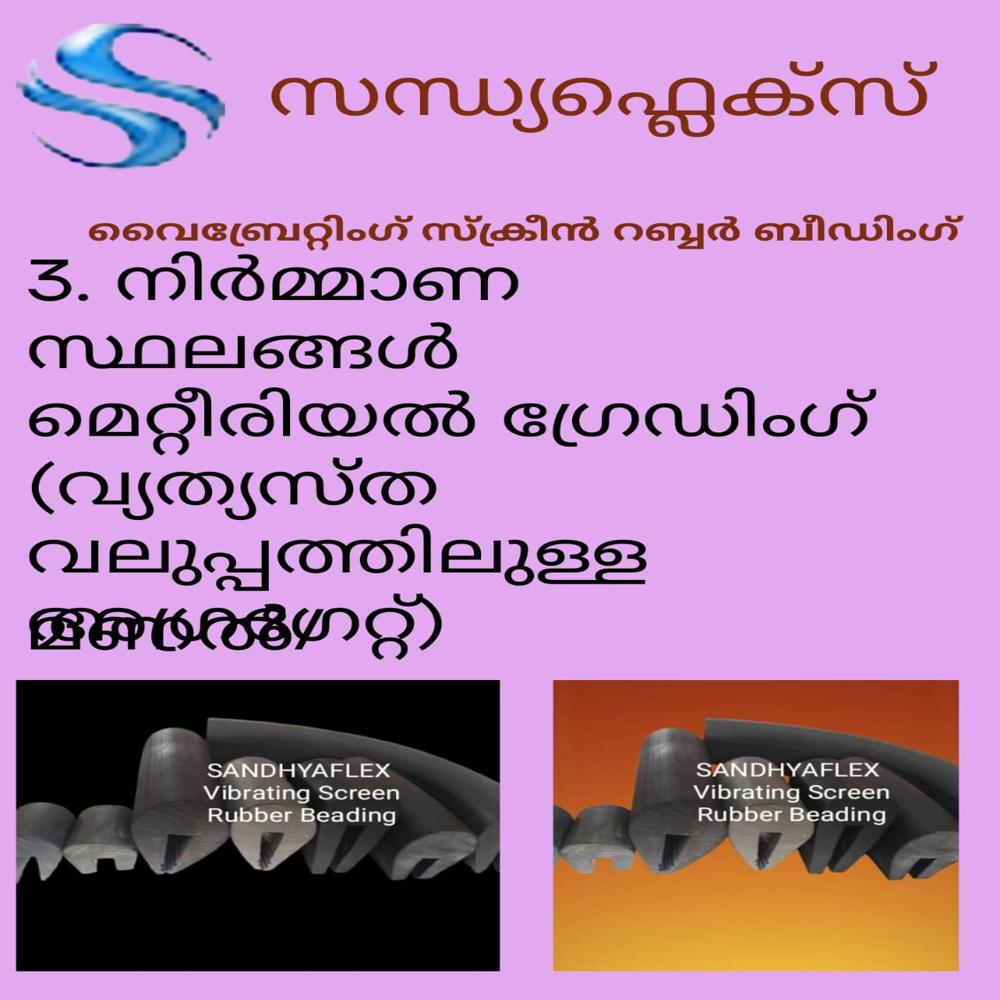
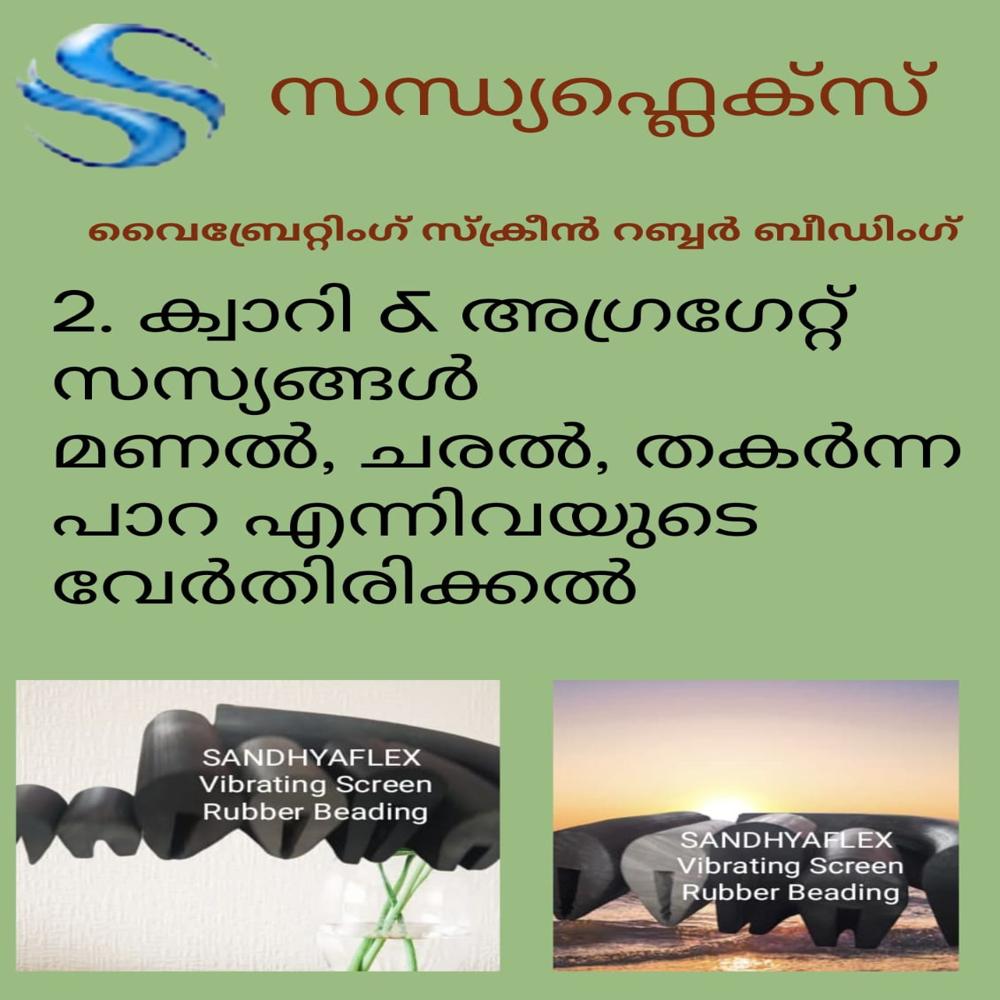
Vibrating Screen Rubber Beading
Price 145.0 INR/ Piece
MOQ : 10 Pieces
Vibrating Screen Rubber Beading Specification
- Lubrication Type
- Oil
- Inside Diameter
- Custom Meter (m)
- Usage
- Here are the **key advantages of Vibrating Screen Rubber Beading**: ### 1. Superior Sealing Prevents leakage of fine particles from the edges of the vibrating screen, ensuring clean and efficient screening. ### 2. Noise Reduction Acts as a buffer between metal parts, significantly reducing operational noise. ### 3. Vibration Absorption Absorbs excessive vibrations, protecting the screen structure and supporting components. ### 4. Increased Equipment Life Minimizes wear and tear on screen mesh and frame, extending overall equipment lifespan. ### 5. Easy Installation & Replacement Flexible design allows quick fitting and removal, reducing downtime during maintenance. ### 6. High Durability Made from abrasion-resistant rubber compounds, suitable for harsh environments like mining and cement plants. ### 7. Weather & Chemical Resistance Depending on material (EPDM, Neoprene, Nitrile), it can resist heat, moisture, oils, and chemicals. ### 8. Cost-Effective Solution Reduces maintenance frequency and replacement costs, improving overall operational efficiency. ### 9. Better Screening Efficiency Ensures proper tension and positioning of screen mesh, improving material separation accuracy. --- If you want, I can also create a **comparison chart (Rubber Beading vs Metal Clamping)** or a **catalog-style content for your Sandhyaflex products**.
- Bearing Type
- Linear Bearing
- Size
- Custom
- Material
- Carbon Steel
- Height
- Custom Millimeter (mm)
- Structure
- V
- Product Type
- U
- Seals Type
- NA
- Number Of Rows
- Single Row
- Weight
- 4.6 Kilograms (kg)
- Color
- BLACK
- Outside Diameter
- Custom Meter (m)
- Length
- 25 Meter (m)
- Width
- 25 Meter (m)
- Limiting Speed
- Custom km/m
- Load Capacity
- Custom Long Ton
Vibrating Screen Rubber Beading Trade Information
- Minimum Order Quantity
- 10 Pieces
- Delivery Time
- 5 Days
Vibrating Screen Rubber Beading About
Vibrating Screen Rubber Beading is a specialized rubber component used in vibrating screens (commonly found in mining, quarrying, cement plants, and aggregate industries). It plays a key role in sealing, cushioning, and protecting the screen structure.
What it is
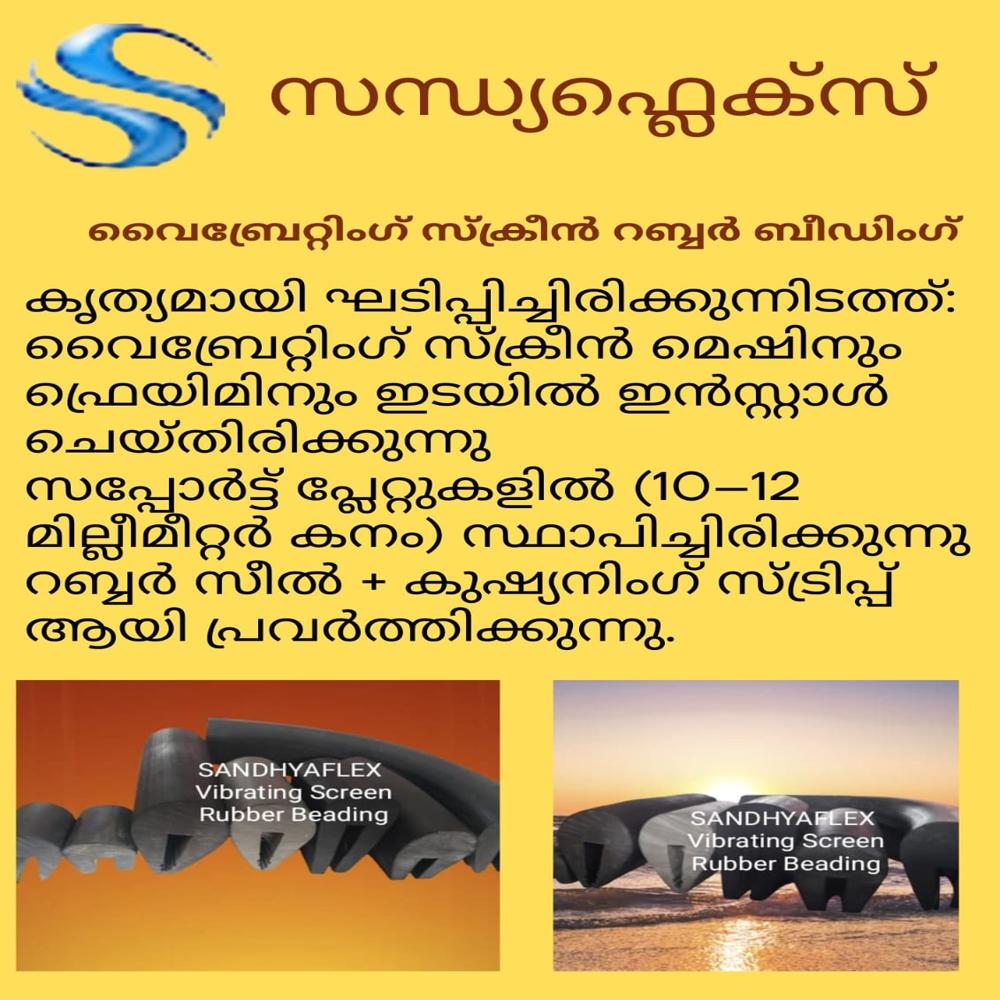
Rubber beading is a flexible strip or profile made from high-quality rubber compounds, fitted along the edges of vibrating screens to hold and protect screen meshes or plates.
Functions
-
Sealing: Prevents leakage of fine materials from screen edges
-
Cushioning: Absorbs vibration and reduces metal-to-metal contact
-
Protection: Extends the life of screen mesh and frame
-
Noise Reduction: Minimizes operational noise
Material Types
Depending on application, rubber beading can be made from:
-
Natural Rubber (NR) high elasticity
-
Neoprene Rubber (CR) weather & chemical resistance
-
EPDM Rubber excellent for outdoor & heat resistance
-
Nitrile Rubber (NBR) oil-resistant applications
Common Features
-
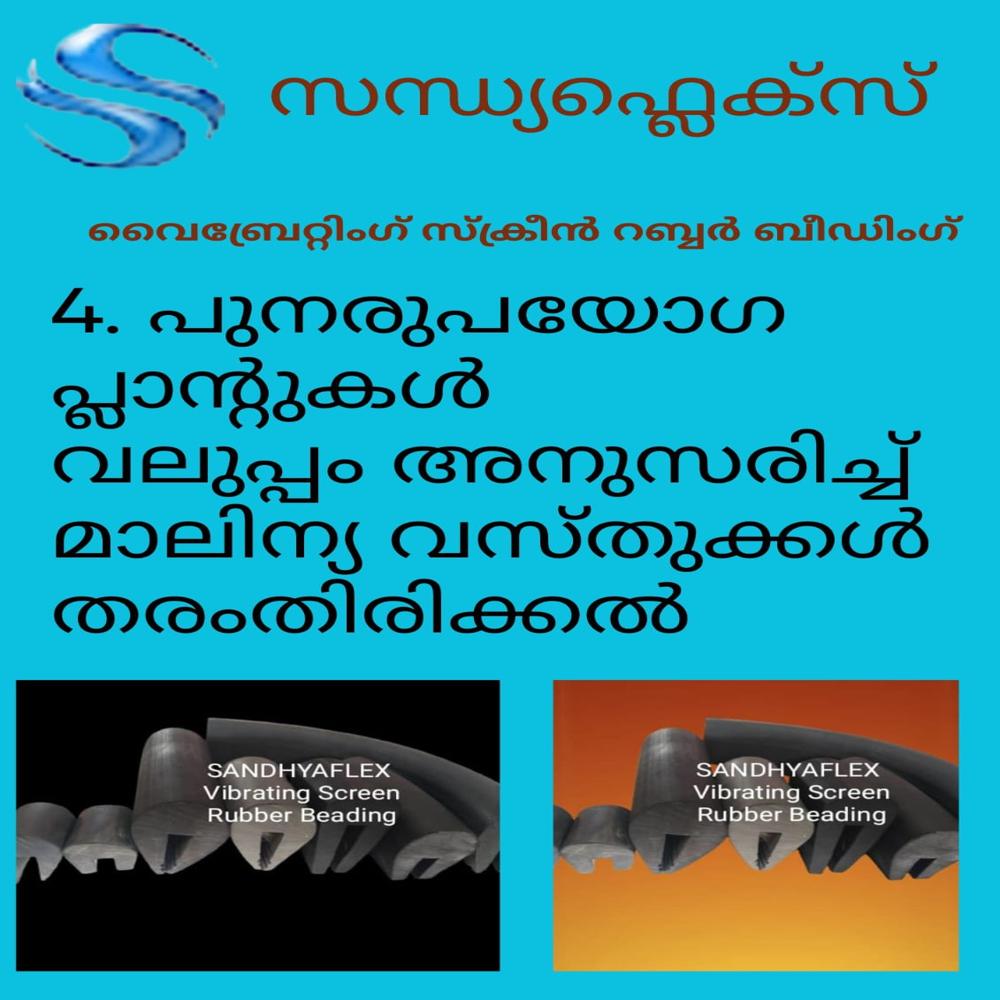
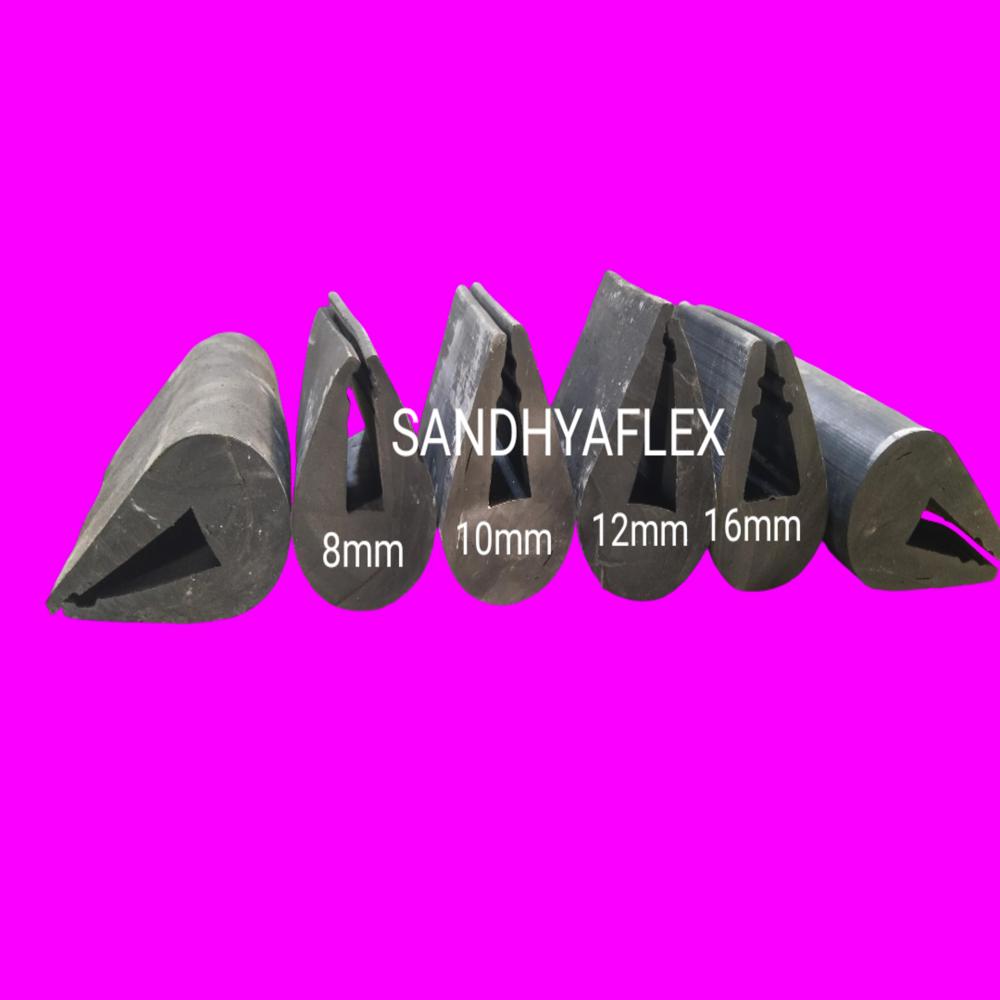
Available in different profiles (U-shape, L-shape, flat strip)
-
High abrasion resistance
-
Flexible and easy to install
-
Custom sizes as per screen design
Applications
-
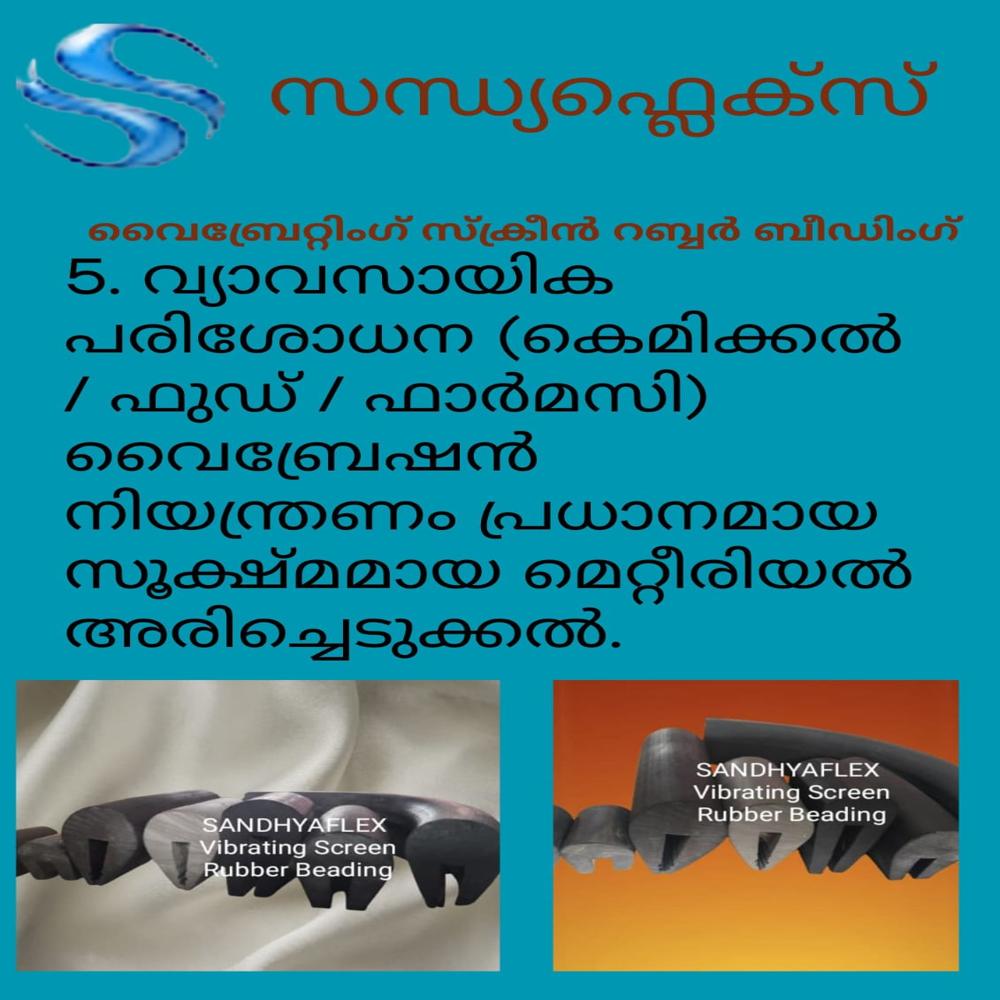
Vibrating screens in mining & crushing plants
-
Coal handling plants
-
Cement and mineral processing units
Benefits
-
Reduces maintenance cost
-
Improves screening efficiency
-
Increases equipment lifespan
If you want, I can also provide sizes, technical specifications, or a product datasheet format for your Sandhyaflex brand.
Enhanced Sealing & Screening Performance
Rubber beading for vibrating screens ensures a tight seal at the mesh edges, preventing the escape of fine particles and improving overall screening efficiency. By maintaining proper mesh tension and reducing leakage, these beadings help deliver more accurate material separation.
Superior Durability & Protection
Manufactured from robust, abrasion-resistant rubber, these beadings stand up to harsh working environments, from mining to cement processing. Their cushioning effect absorbs excessive vibration, protecting both the screen mesh and frame, and significantly extending equipment lifespan.
Quick Installation & Cost Savings
Designed for flexibility and easy handling, rubber beadings can be installed or replaced quickly with minimal tools, reducing downtime during maintenance. Their durability and simple maintenance requirements mean fewer replacements and lower long-term operating costs.
FAQ's of Vibrating Screen Rubber Beading:
Q: How do vibrating screen rubber beadings contribute to cleaner and more efficient screening?
A: These beadings provide superior sealing along the edges of the vibrating screen mesh, effectively preventing leakage of fine particles. This ensures that material separation is cleaner, reduces product contamination, and boosts the screening efficiency.Q: What benefits does rubber beading offer over metal clamping for vibrating screens?
A: Rubber beading acts as a buffer to reduce operational noise, absorbs vibrations to protect equipment, and is resistant to weather and chemicals. Unlike metal clamping, it is also easier to install or replace, requires less maintenance, and does not corrode.Q: When should vibrating screen rubber beadings be replaced?
A: It is advisable to inspect the rubber beading during regular maintenance checks. If you notice visible wear, cracking, hardening, or reduced sealing effectiveness, replacement should be performed promptly to maintain screening performance and equipment protection.Q: Where can vibrating screen rubber beading be used?
A: These beadings are used in all types of vibrating screens, especially in industries such as mining, cement, aggregate, and quarrying, where protection against abrasion, noise, and vibration is essential.Q: What materials are typically used for manufacturing these rubber beadings?
A: Common materials include EPDM, Neoprene, and Nitrile rubber. Each offers unique resistance properties against heat, moisture, chemicals, and oils, making the beading suitable for various harsh operational environments.Q: How is the installation process of vibrating screen rubber beading carried out?
A: Installation involves placing the beading along the screen mesh edge and pressing it into position. Its flexibility allows for easy fitting and quick replacement with minimal downtime and basic tools.Q: What makes vibrating screen rubber beading a cost-effective solution?
A: Because the beading reduces wear, vibration, and noise, it extends the life of screen meshes and frames. This leads to fewer replacements and maintenance interventions, translating to lower operating costs over time.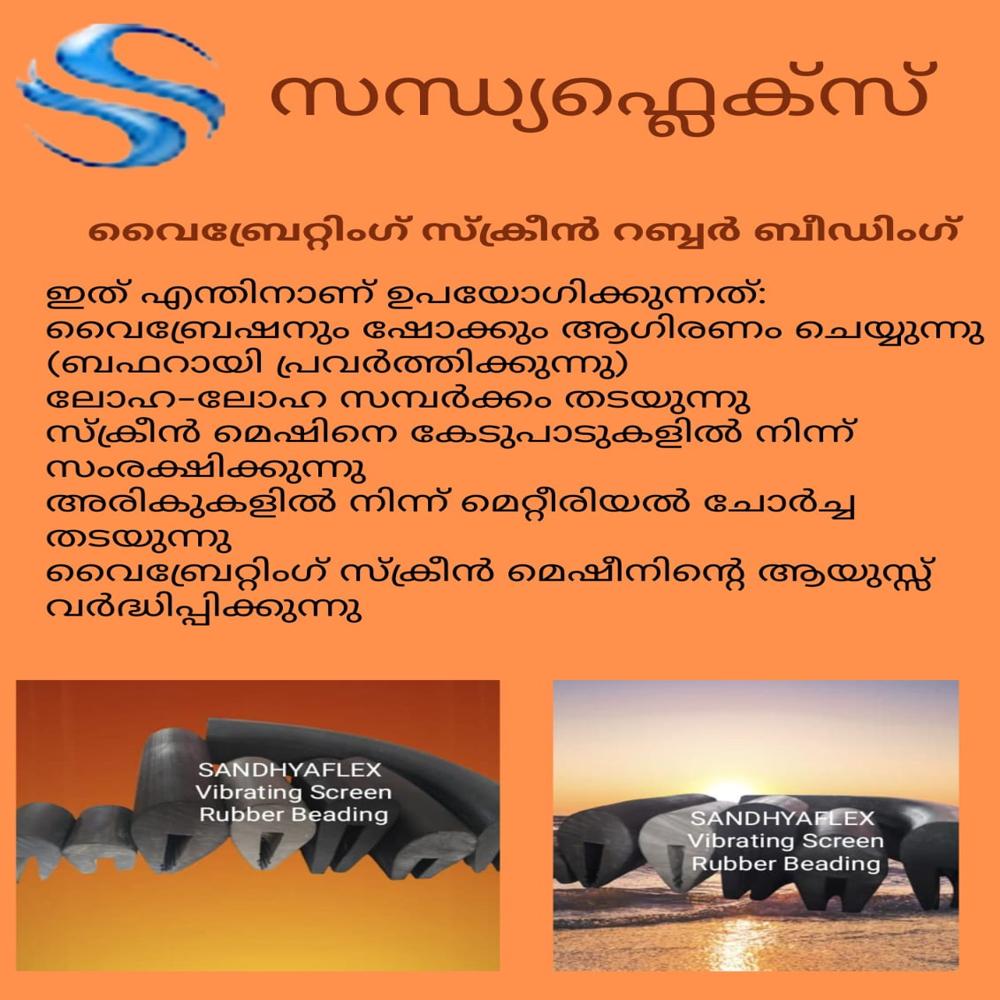
Tell us about your requirement

Price:
Quantity
Select Unit
- 50
- 100
- 200
- 250
- 500
- 1000+
Additional detail
Mobile number
Email

More Products in Vibrating Screen Rubber Beading Category
Vibrating Screen Rubber Beading
Price 150.0 INR / Meter
Minimum Order Quantity : 1 Meter
Material : Other
Thickness : 10 mm to 25 mm (Standard), can be customized Gauge
Seals Type : Custom
Number Of Rows : Other
Vibrating Screen Rubber Beading
Price 150.0 INR / Meter
Minimum Order Quantity : 1 Piece
Material : Other
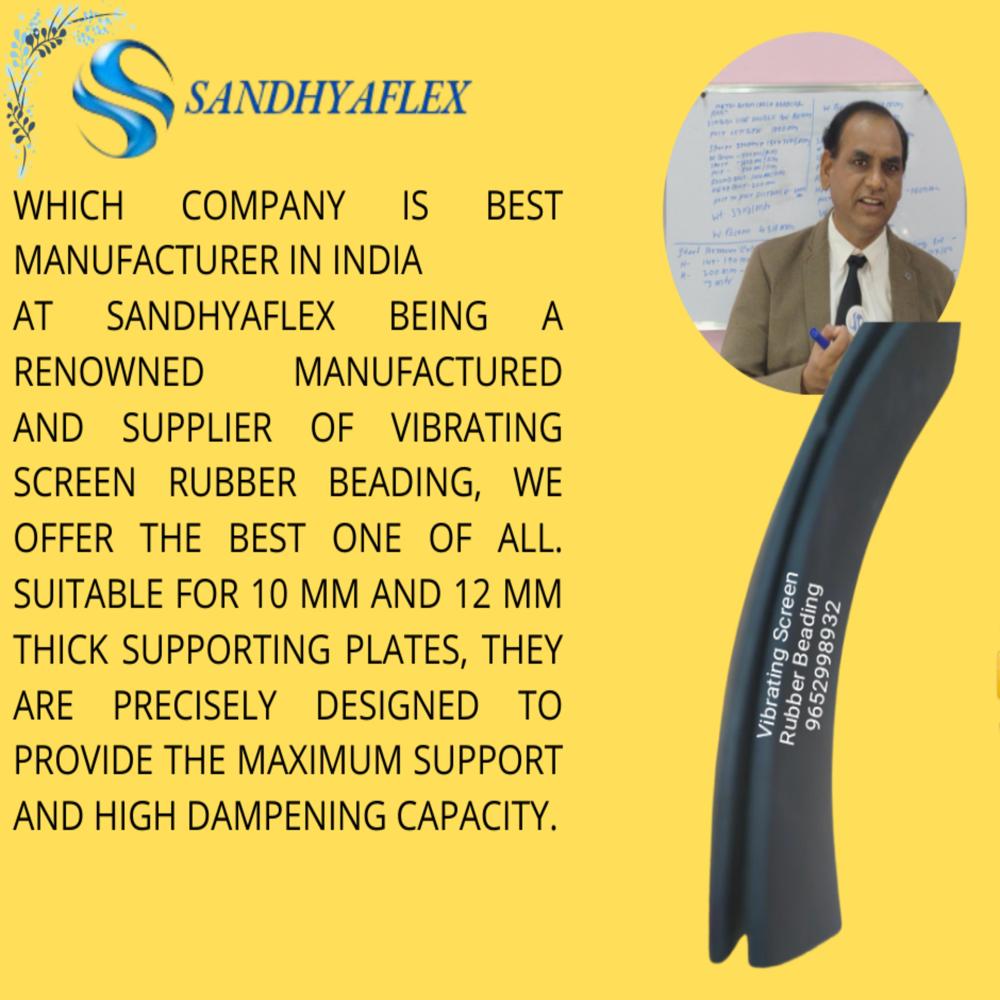
Thickness : 10 mm to 25 mm (standard sizes) Meter
Seals Type : No seals
Number Of Rows : Single Row
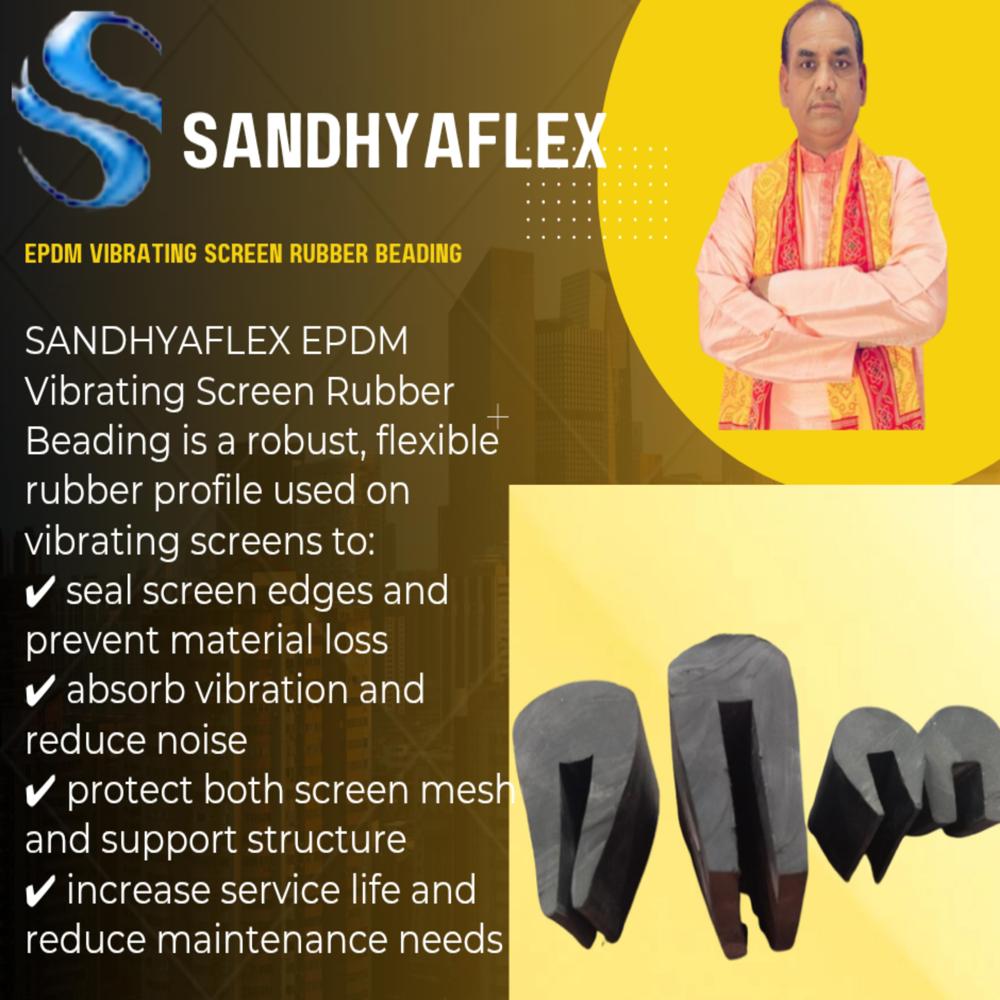
Vibrating Screen Rubber Beading
Price 220.0 INR / Meter
Minimum Order Quantity : 1 Meter
Material : Other
Thickness : 4mm Millimeter (mm)
Seals Type : Rubber Beading
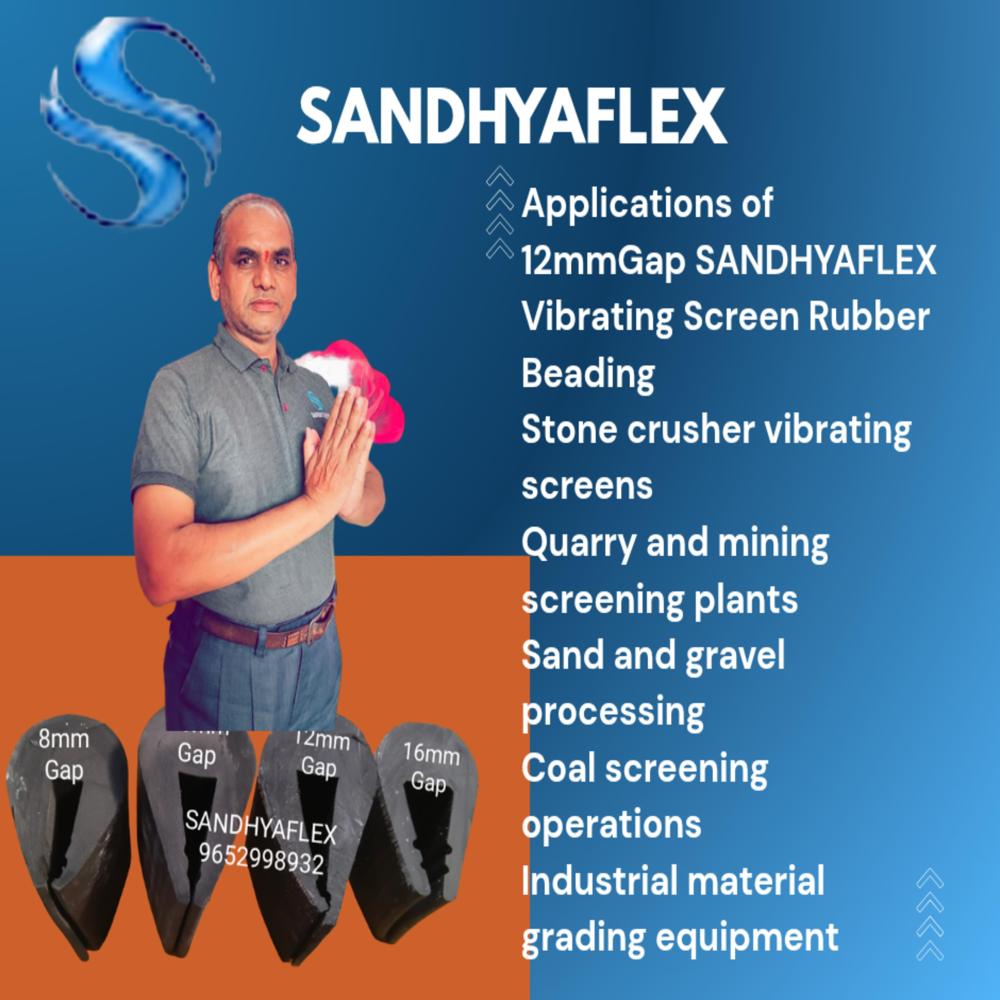
12mm Gap Vibrating Screen Rubber Beading
Price 130.0 INR / Meter
Minimum Order Quantity : 1 Meter
Material : Other, High Tensile Rubber / EPDM Rubber
Thickness : 12mm
Seals Type : No Seals / Open Type
Number Of Rows : Other, Single


 Send Inquiry
Our Products
- PVC Water Stopper
- Rubber Gaskets
- Industrial Rubber Hoses
- Elastomeric Bridge Bearing
- Bellow And Expansion Joint
- Drainage Spout
- LDPE Sheets
- Speed Breaker
- PVC Granules
- PVC Water Bar
- Rubber Products
- Tie Rod
- Braided Pipe
- Bridge Expansion Joint
- Dam Gate Seal
- pvc water stopper
- Cement Feeding Rubber Hose
- Slurry Rubber Hose
- Water Suction and Discharge Rubber Hose
- Oil Suction and Discharge Rubber Hose
- Water Swellable Bar
- Electrical Insulating Mat
- Dewatering Rubber Hose
- Strip Seal Expansion Joint
- Pot PTFE bridge Bearing
- Expansion joint Filler Board
- PVC Foot Step
- Curing Hessian Cloth
- Vibrating Screen Rubber Beading
- Carbon Free Rubber Hose
- Rubber corner guard


24-1223/8/A, AMBEDKAR NAGAR, Gajularamaram,Hyderabad - 500055, Telangana, India

Mr Mithilesh Chaudhary
(Proprietor)
Mobile :08071781474
 Send Inquiry
 Send SMS
Developed and Managed by Infocom Network Private Limited.
