
Call us now :08071781474
 Send Inquiry
 Send Inquiry
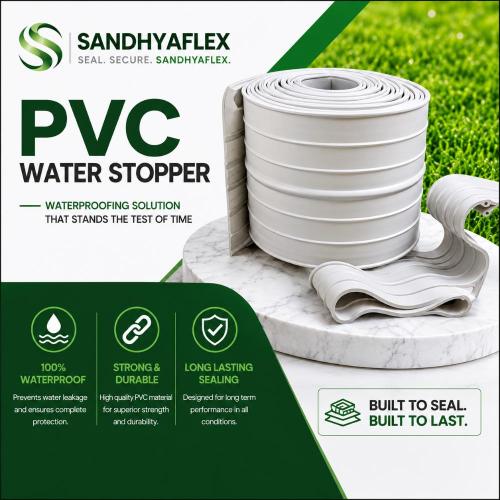
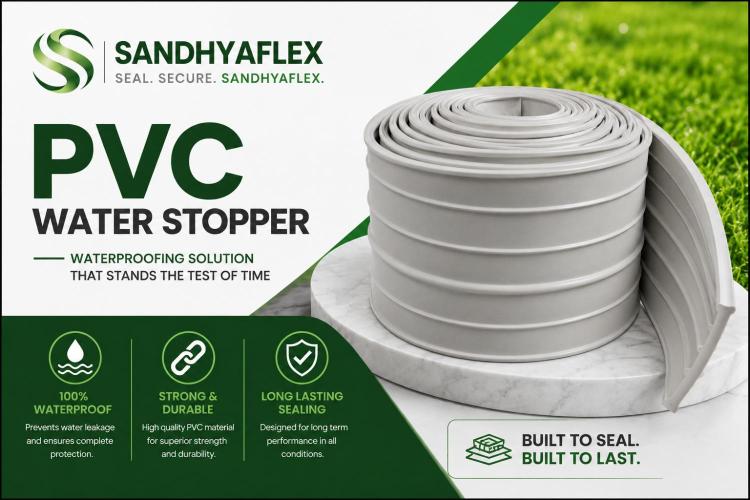
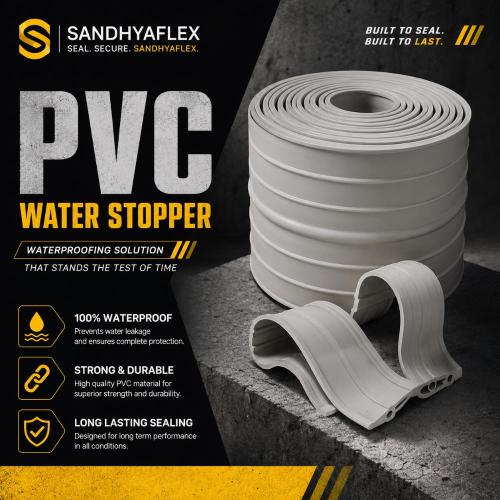
PVC Water Stopper
Price 80.0 INR/ Piece
MOQ : 100 Pieces
PVC Water Stopper Specification
- Usage
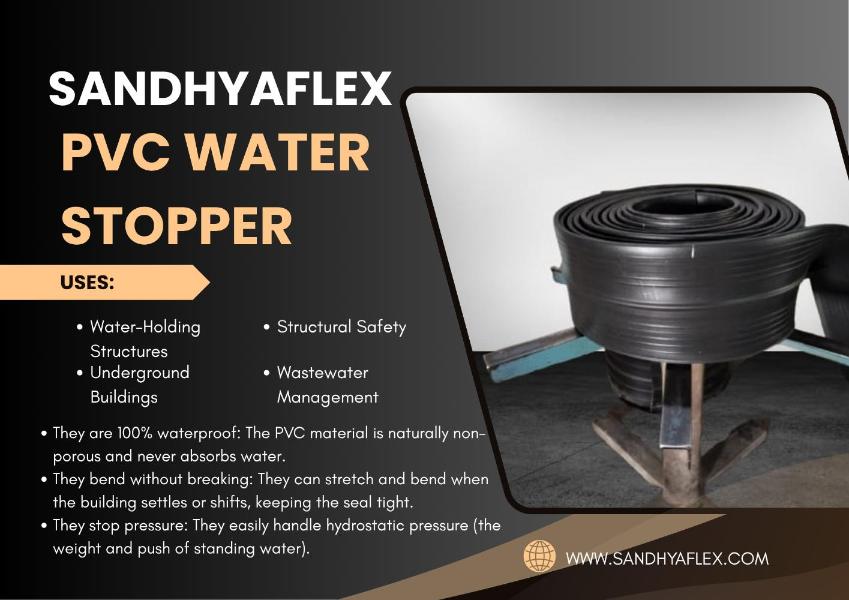
- Sandhya Enterprises are one of the top manufacturers in India. Water Stoppers are the flexible plastic strips that are used to provide a physical barrier to water. The barriers can be at concrete joints in basements, water-retaining structures like water tanks, swimming pools, structural foundations and other constructions of below ground level. Water stoppers are also known as water bars and seal construction joints. In a typical water stopper, there are two identical halves on both sides of the central bulb. They serve as an additional extension aiming to increase the path length for water entering behind the edge of water stopper. Compounding of PVC Water Stopper Anti-ageing customized plastic compound is used for manufacturing the water stoppers. Alongside, it has PVC as a base polymer. Moreover, the properties it exhibit are high elasticity and tensile strength, immunity to corrosion, excellent weather resistance, unaffected by acids, alkalis, metals, salts and other chemicals. Other properties include lower water absorption, high hydrostatic pressure withstanding capacity, heavy turbine shock bearing alongside earthquakes and floods. Application in construction industry The PVC water stopper acts as a sealant at RCC Masonry concrete joints alongside preventing any water seepage through the joints.
- Material
- Poly Vinyl Chaloride
- Size
- 150,200x230,240,250 and 300
- Type
- Center Bulb
- Height
- 230 Millimeter (mm)
- Thickness
- 8 Millimeter (mm)
- Product Type
- Center bulb
- Weight
- 70 Kilograms (kg)
- Application
- Sandhya Enterprises are one of the top manufacturers in India. Water Stoppers are the flexible plastic strips that are used to provide a physical barrier to water. The barriers can be at concrete joints in basements, water-retaining structures like water tanks, swimming pools, structural foundations and other constructions of below ground level. Water stoppers are also known as water bars and seal construction joints. In a typical water stopper, there are two identical halves on both sides of the central bulb. They serve as an additional extension aiming to increase the path length for water entering behind the edge of water stopper. Compounding of PVC Water Stopper Anti-ageing customized plastic compound is used for manufacturing the water stoppers. Alongside, it has PVC as a base polymer. Moreover, the properties it exhibit are high elasticity and tensile strength, immunity to corrosion, excellent weather resistance, unaffected by acids, alkalis, metals, salts and other chemicals. Other properties include lower water absorption, high hydrostatic pressure withstanding capacity, heavy turbine shock bearing alongside earthquakes and floods. Application in construction industry The PVC water stopper acts as a sealant at RCC Masonry concrete joints alongside preventing any water seepage through the joints.
- Color
- White
- Width
- 8 Millimeter (mm)
- Length
- 230 Millimeter (mm)
- Hardness
- 68 Shore A
- Surface Treatment
- Reinforcement
- Feature
- Waterproof
PVC Water Stopper Trade Information
- Minimum Order Quantity
- 100 Pieces
- Payment Terms
- Telegraphic Transfer (T/T), Cash in Advance (CID)
- Supply Ability
- 1000 Pieces Per Day
- Delivery Time
- 7 Days
- Sample Available
- No
- Sample Policy
- If order is confirmed we will reimburse the sample cost
- Packaging Details
- Export Packing Date:02.09.2023 Dimension in CBM PVC Water Stopper with Center Bulb Each Roll 25Mtr SR No Dimension Length Width Height CBM Weight kg/Roll 1 150x5mm 0.625 0.625 0.150 0.059 40 2 150x6mm 0.625 0.625 0.150 0.059 45 3 150x8mm 0.625 0.625 0.150 0.059 55 4 200x8mm 0.625 0.625 0.200 0.059 60 5 200x10mm 0.65 0.65 0.200 0.078 64 6 225x5mm 0.625 0.625 0.23 0.090 65 7 225x6mm 0.625 0.625 0.230 0.090 70 8 225x8mm 0.65 0.65 0.230 0.097 90 9 225x10mm 0.65 0.65 0.230 0.097 100 10 240x8mm 0.65 0.650 0.240 0.104 110 11 240x10mm 0.650 0.650 0.240 0.104 125 12 250x8mm 0.675 0.675 0.250 0.114 95 13 250x10mm 0.675 0.675 0.250 0.114 115 14 300x6mm 0.700 0.700 0.300 0.147 95 15 300x8mm 0.725 0..725 0.300 0.158 115 16 300x10mm 0.750 0.750 0.300 0.169 140 17 300x12mm 0.775 0.775 0.300 0.18 140 18 300x15mm 0.800 0.800 0.300 0.192 160 Kiker Type 19 230x4mm 0.625 0.625 0.230 0.090 67 Dumbbell Type 20 230x8mm 0.650 0.650 0.230 0.097 87 21 230x10mm 0.650 0.650 0.230 0.097 100
- Main Export Market(s)
- Asia
- Main Domestic Market
- All India
- Certifications
- ISO 9001 2015
About PVC Water Stopper
Sandhya Enterprises are one of the top manufacturers in India. Water Stoppers are the flexible plastic strips that are used to provide a physical barrier to water. The barriers can be at concrete joints in basements, water-retaining structures like water tanks, swimming pools, structural foundations and other constructions of below ground level. Water stoppers are also known as water bars and seal construction joints. In a typical water stopper, there are two identical halves on both sides of the central bulb. They serve as an additional extension aiming to increase the path length for water entering behind the edge of water stopper.
Compounding of PVC Water Stopper
Anti-ageing customized plastic compound is used for manufacturing the water stoppers. Alongside, it has PVC as a base polymer. Moreover, the properties it exhibit are high elasticity and tensile strength, immunity to corrosion, excellent weather resistance, unaffected by acids, alkalis, metals, salts and other chemicals. Other properties include lower water absorption, high hydrostatic pressure withstanding capacity, heavy turbine shock bearing alongside earthquakes and floods.
Application in construction industry
- The PVC water stopper acts as a sealant at RCC Masonry concrete joints alongside preventing any water seepage through the joints.
-
-
- A PVC water stopper is a type of construction material used to prevent the passage of water through joints or gaps in structures such as concrete walls, floors, or basements. It is commonly used in applications where water leakage needs to be controlled or prevented, such as in swimming pools, water tanks, tunnels, or underground structures.
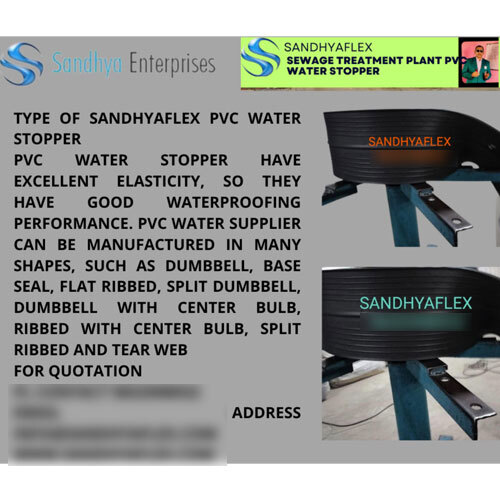
- PVC water stoppers are made from polyvinyl chloride (PVC), a durable and flexible plastic material. They are designed in various shapes and sizes to accommodate different joint configurations and construction requirements. The most common types of PVC water stoppers include:
- 1. Straight Water Stopper: This type of water stopper is used in straight joints or construction joints where two concrete sections meet. It provides a barrier against water infiltration.
- 2. Internal and External Corners: These water stoppers are specifically designed to fit into the internal and external corners of joints, ensuring a watertight seal at these critical areas.
- 3. Bulb-Type Water Stopper: This water stopper features a bulbous shape that provides additional flexibility and sealing capacity. It is suitable for applications where joints are subject to movement or expansion.
- 4. Ribbed Water Stopper: Ribbed water stoppers have a ribbed surface that enhances the grip and bonding with concrete. This type of water stopper offers excellent sealing capabilities and is commonly used in high-pressure water applications.
- PVC water stoppers are typically installed during the concrete pouring process. They are embedded within the joints, ensuring a secure and watertight seal. The flexibility of PVC allows the water stopper to accommodate movement or settling of the surrounding structures without compromising its sealing properties.
- It is important to follow the manufacturer's guidelines and consult with a qualified engineer or contractor for the appropriate selection and installation of PVC water stoppers based on the specific project requirements.
Advanced Waterproofing Solution
PVC Water Stoppers with a center bulb design provide robust water resistance for construction joints. The unique central bulb structure increases the length of the seepage path, ensuring water is effectively blocked from passing through critical concrete junctions.
Engineered for Durability
Manufactured using a custom anti-ageing PVC compound, these water stoppers possess high elasticity, respond excellently to structural movement, and are highly resistant to weather, chemicals, and physical shock. They are designed to remain effective even during heavy flooding or seismic activity.
Versatile Construction Applications
Suitable for use in basements, water tanks, swimming pools, and other below-ground structures, the PVC Water Stopper is an essential component in water-retaining construction. Its flexible installation options make it a preferred choice among contractors and builders across various industries.
FAQ's of PVC Water Stopper:
Q: How does the center bulb design in a PVC Water Stopper enhance waterproofing?
A: The center bulb in a PVC Water Stopper serves as an additional extension, increasing the path that water must travel to penetrate the joint. This design helps to effectively prevent seepage by creating a more formidable barrier within construction joints.Q: What is the typical usage process for installing a PVC Water Stopper in construction?
A: PVC Water Stoppers are embedded within concrete at joints during construction, such as in basements or tanks. The stopper is placed between concrete pours to seal the joint and prevent water passage, ensuring persistent watertight integrity as the structure sets.Q: Where are PVC Water Stoppers commonly used?
A: These water stoppers are widely used in water-retaining structures like swimming pools, water tanks, basements, structural foundations, and any construction below ground level where water ingress is a concern.Q: What are the main benefits of using PVC Water Stoppers from Sandhya Enterprises?
A: Benefits include high elasticity, excellent tensile strength, immunity to corrosion, weather resistance, and chemical stability. They also withstand hydrostatic pressure, heavy vibrations, and shocks from flooding or earthquakes, offering long-term waterproofing performance.Q: When should a PVC Water Stopper be used during the construction process?
A: A PVC Water Stopper should be installed at the time of casting concrete, particularly at the junctions of construction joints. Early installation ensures a continuous seal and optimal waterproofing efficiency for the structure over time.Q: What makes the material composition of these water stoppers suitable for harsh environments?
A: Manufactured from an anti-ageing custom PVC compound, these stoppers resist acids, alkalis, salts, and most chemicals, while their low water absorption and robust physical properties prepare them to endure challenging site conditions and environmental stressors.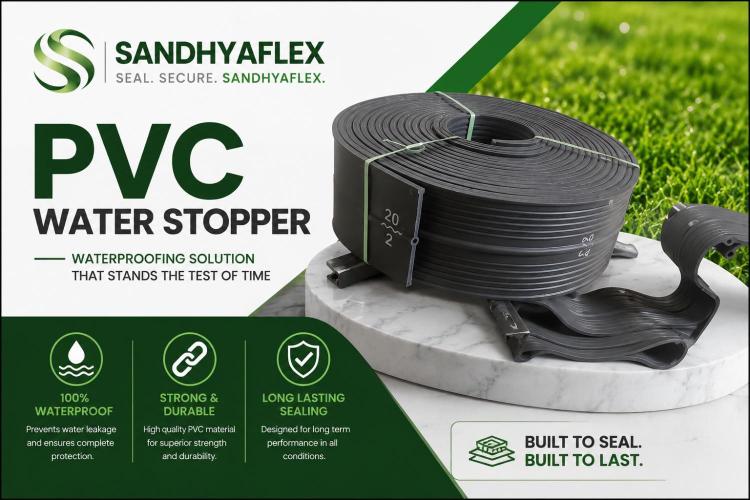
Tell us about your requirement

Price:
Quantity
Select Unit
- 50
- 100
- 200
- 250
- 500
- 1000+
Additional detail
Mobile number
Email

More Products in PVC Water Stopper Category
PVC Water Stoper with center Bulb
Price 140.0 INR / Meter
Minimum Order Quantity : 1 Meter
Hardness : 65
Thickness : 6 Millimeter (mm)
Material : PVC
Application : Industrial
PVC Water Stopper
Price 150.0 INR / Meter
Minimum Order Quantity : 10
Hardness : 6098 Shore A
Thickness : 8 Millimeter (mm)
Material : Polyvinyl Chloride (PVC)
Application : Construction joints in concrete structures, Water retaining structures, Dams, Tunnels
PVC Water Stopper
Price 140.0 INR / Meter
Minimum Order Quantity : 10
Hardness : 65 5 Shore A
Thickness : 8 Meter
Material : Polyvinyl Chloride (PVC)
Application : Concrete construction joints, Expansion joints, Water retaining structures
PVC Water Seal 225*6mm
Price 140.00 INR / Meter
Minimum Order Quantity : 1 Meter
Hardness : High
Thickness : 6 Millimeter (mm)
Material : PVC
Application : Industrial


 Send Inquiry
Our Products
- PVC Water Stopper
- Rubber Gaskets
- Industrial Rubber Hoses
- Elastomeric Bridge Bearing
- Bellow And Expansion Joint
- Drainage Spout
- LDPE Sheets
- Speed Breaker
- PVC Granules
- PVC Water Bar
- Rubber Products
- Tie Rod
- Braided Pipe
- Bridge Expansion Joint
- Dam Gate Seal
- pvc water stopper
- Cement Feeding Rubber Hose
- Slurry Rubber Hose
- Water Suction and Discharge Rubber Hose
- Oil Suction and Discharge Rubber Hose
- Water Swellable Bar
- Electrical Insulating Mat
- Dewatering Rubber Hose
- Strip Seal Expansion Joint
- Pot PTFE bridge Bearing
- Expansion joint Filler Board
- PVC Foot Step
- Curing Hessian Cloth
- Vibrating Screen Rubber Beading
- Carbon Free Rubber Hose
- Rubber corner guard


24-1223/8/A, AMBEDKAR NAGAR, Gajularamaram,Hyderabad - 500055, Telangana, India

Mr Mithilesh Chaudhary
(Proprietor)
Mobile :08071781474
 Send Inquiry
 Send SMS
Developed and Managed by Infocom Network Private Limited.
