
Call us now :08071781474
 Send Inquiry
 Send Inquiry
Fly Ash Rubber Hose
Price 1600.0 INR/ Meter
MOQ : 1 Meter
Fly Ash Rubber Hose Specification
- Hardness
- 60 Shore A
- Medium
- Air
- Connection Type
- MS Flange
- Cover
- Rubber
- Shape
- Round
- Reinforcement
- Tire Cord and Helicles wire
- Usage
- Cement Industries
- Material
- Rubber
- Size
- 100mm
- Temperature
- 70 Celsius (oC)
- Height
- 125 Millimeter (mm)
- Pressure
- 10 Bar
- Product Type
- Rubber Hose
- Inside Diameter
- 100 Millimeter (mm)
- Weight
- 5 Kilograms (kg)
- Color
- Black
- Outside Diameter
- 125 Millimeter (mm)
- Length
- 5 Meter (m)
- Width
- 125 Millimeter (mm)
- Warranty
- 6moth
Fly Ash Rubber Hose Trade Information
- Minimum Order Quantity
- 1 Meter
- Delivery Time
- 7 Days
About Fly Ash Rubber Hose
Fly Ash Rubber Hose Industrial Overview
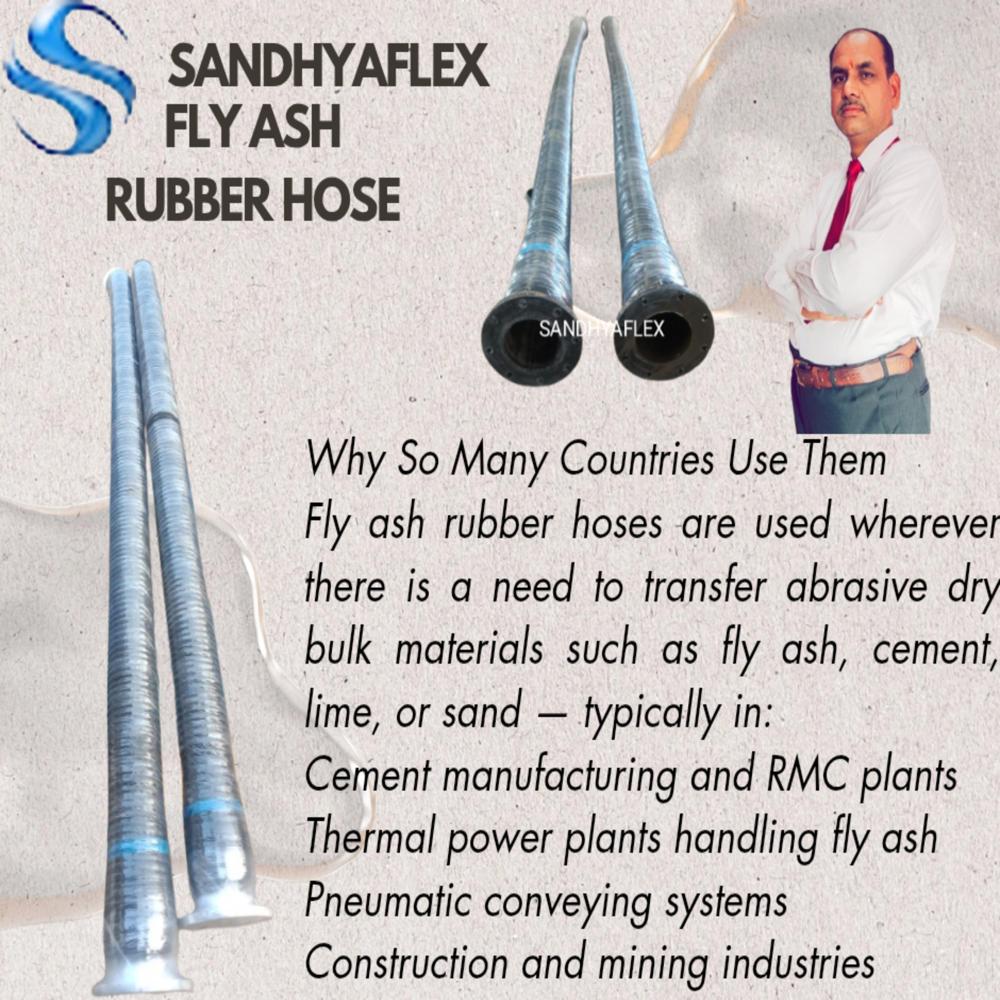
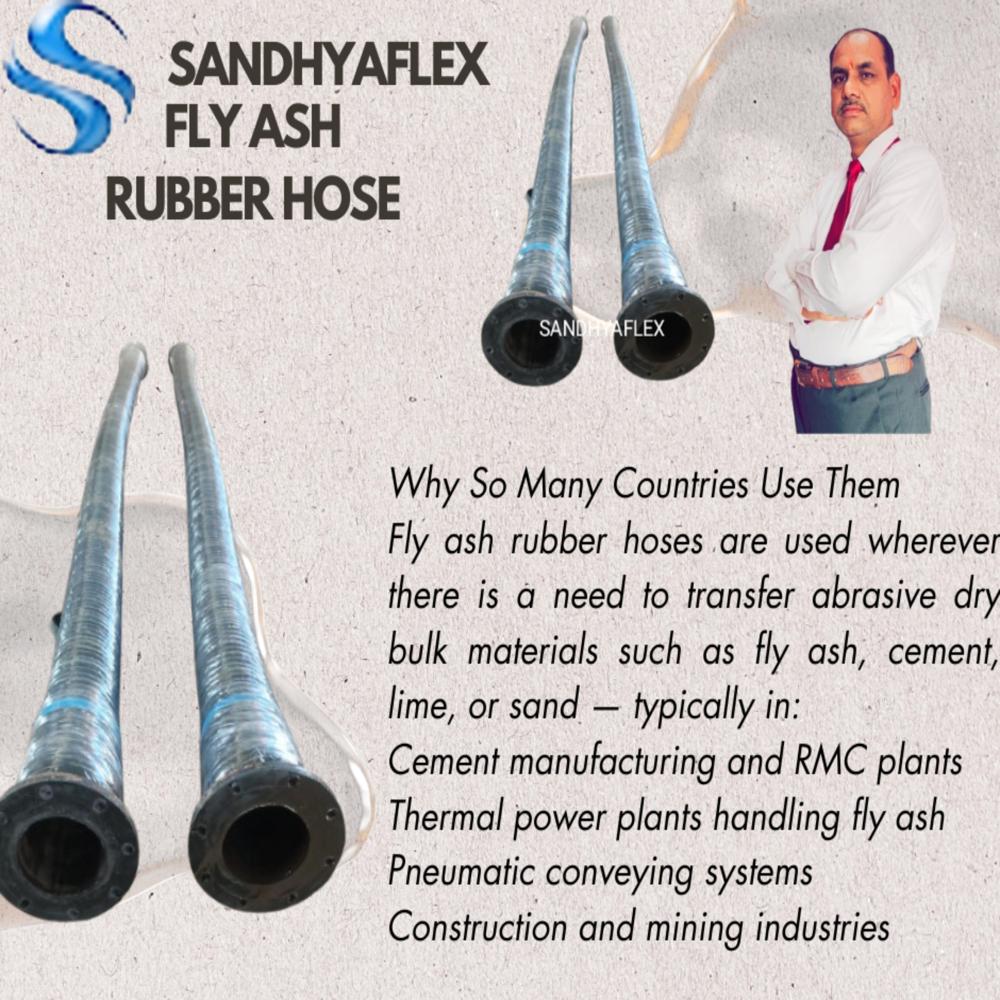
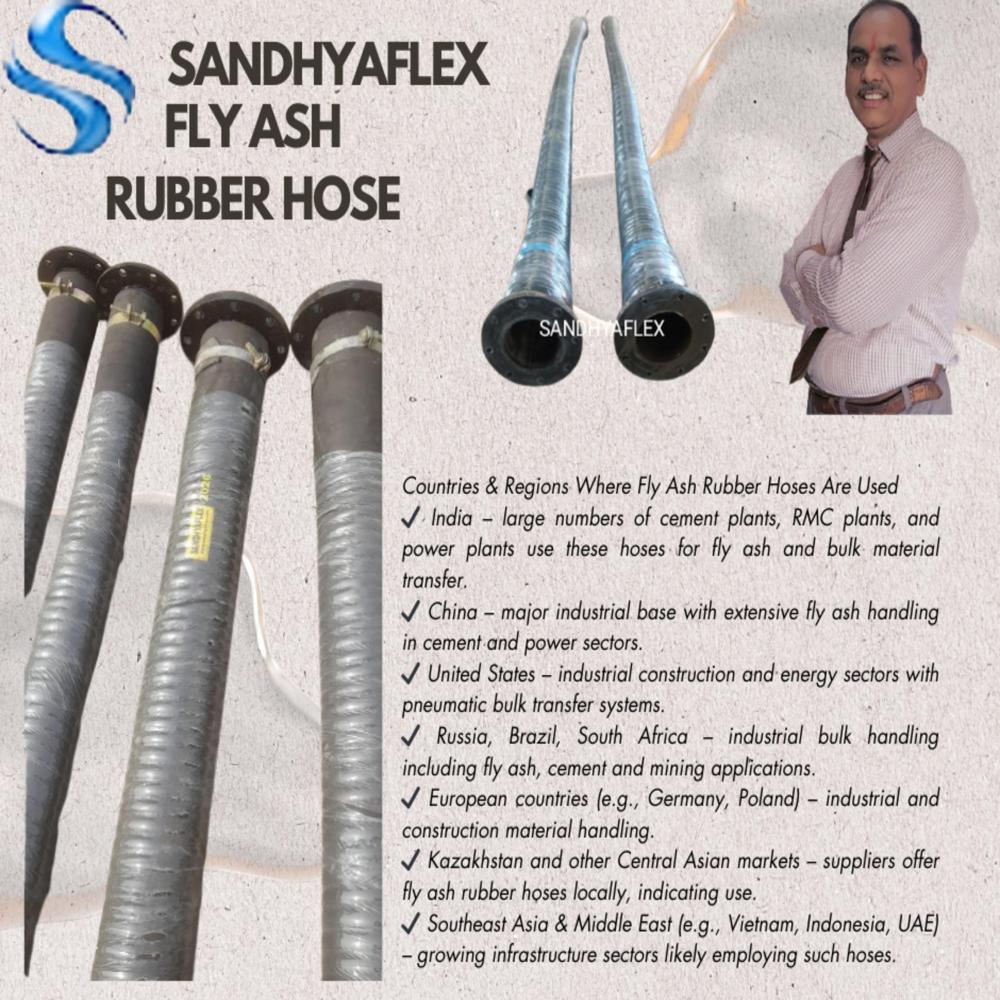
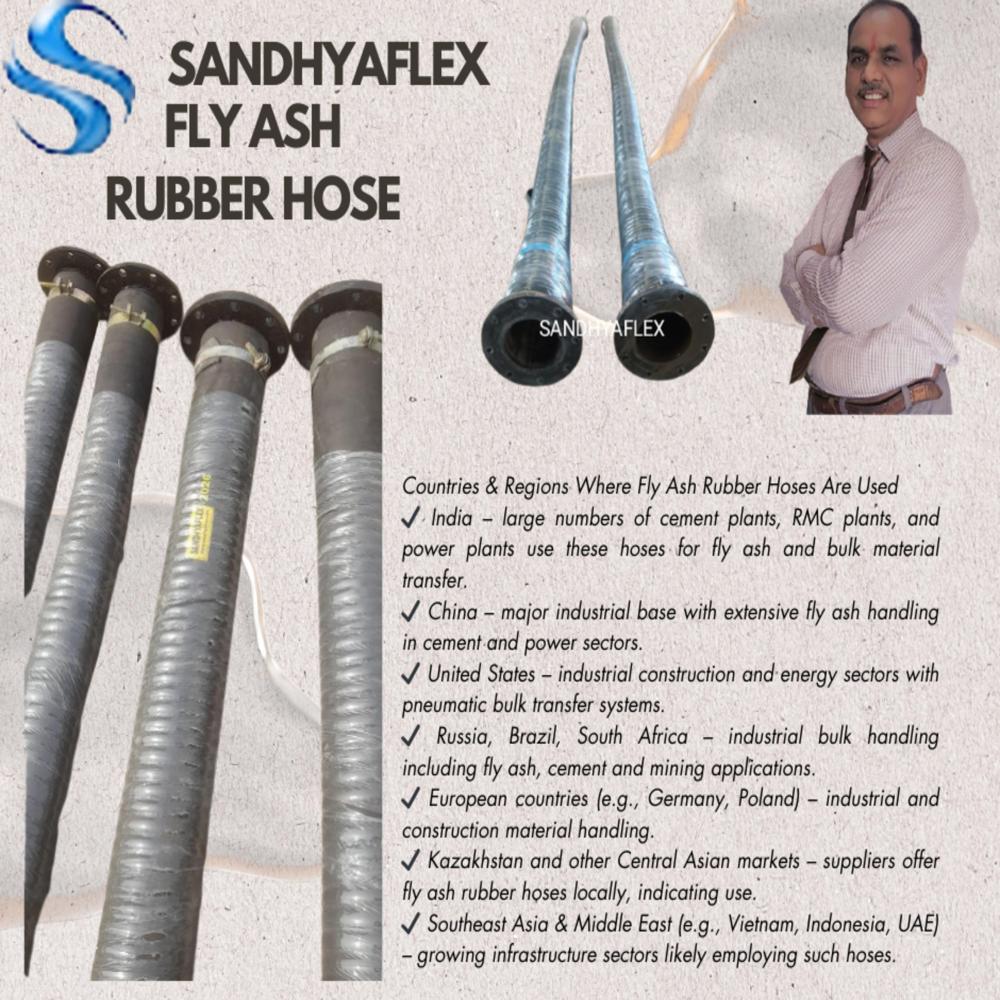
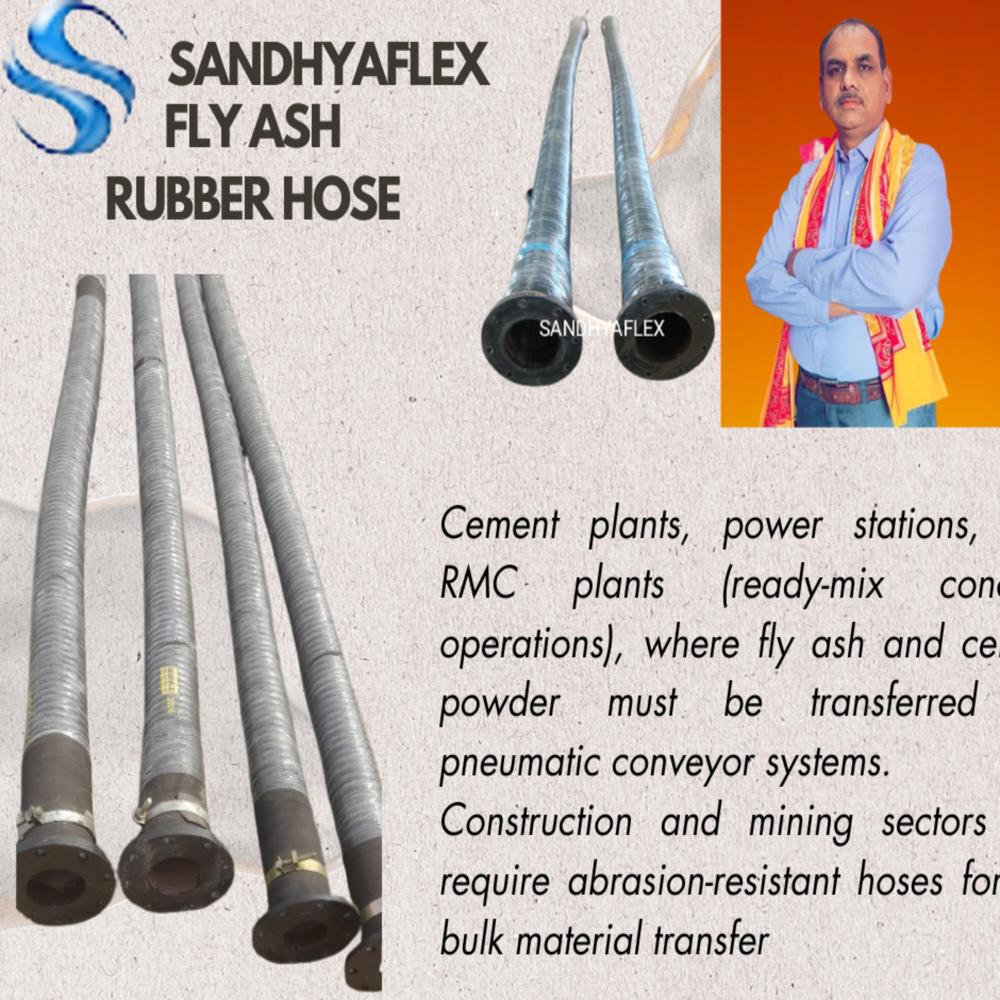
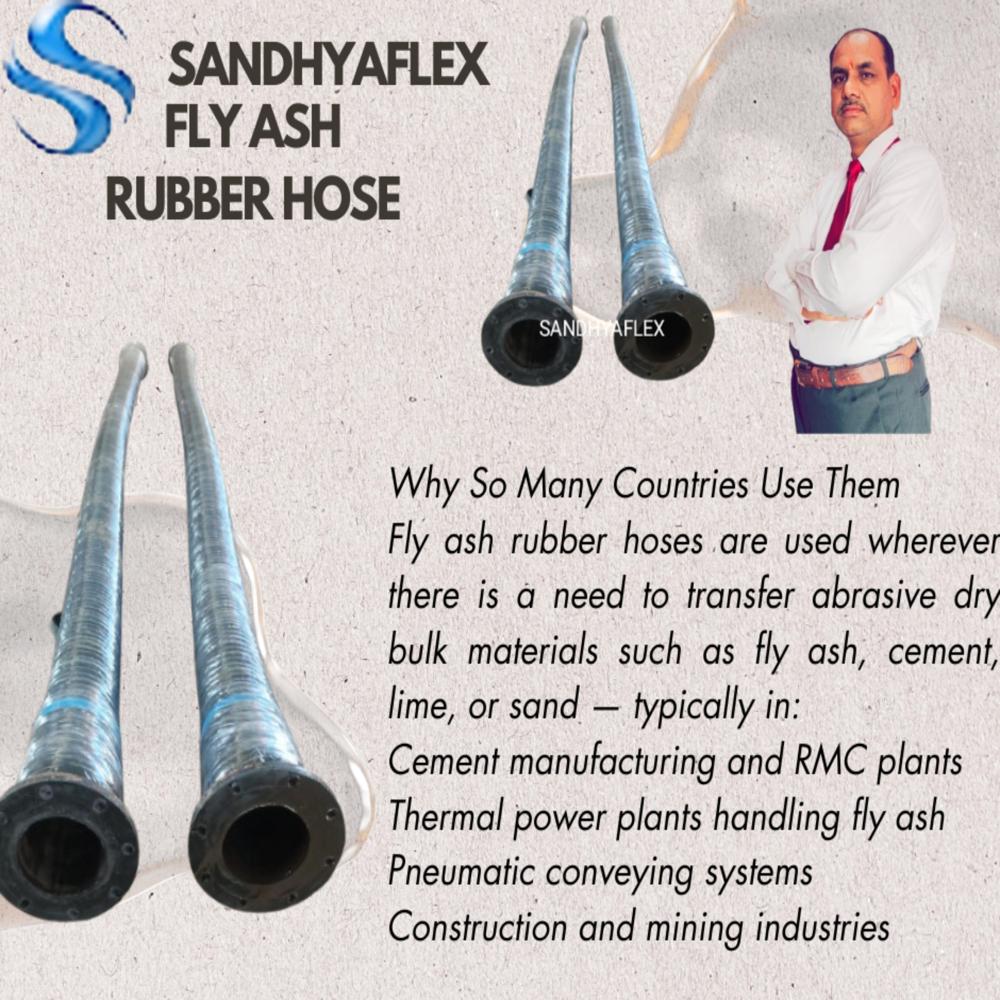
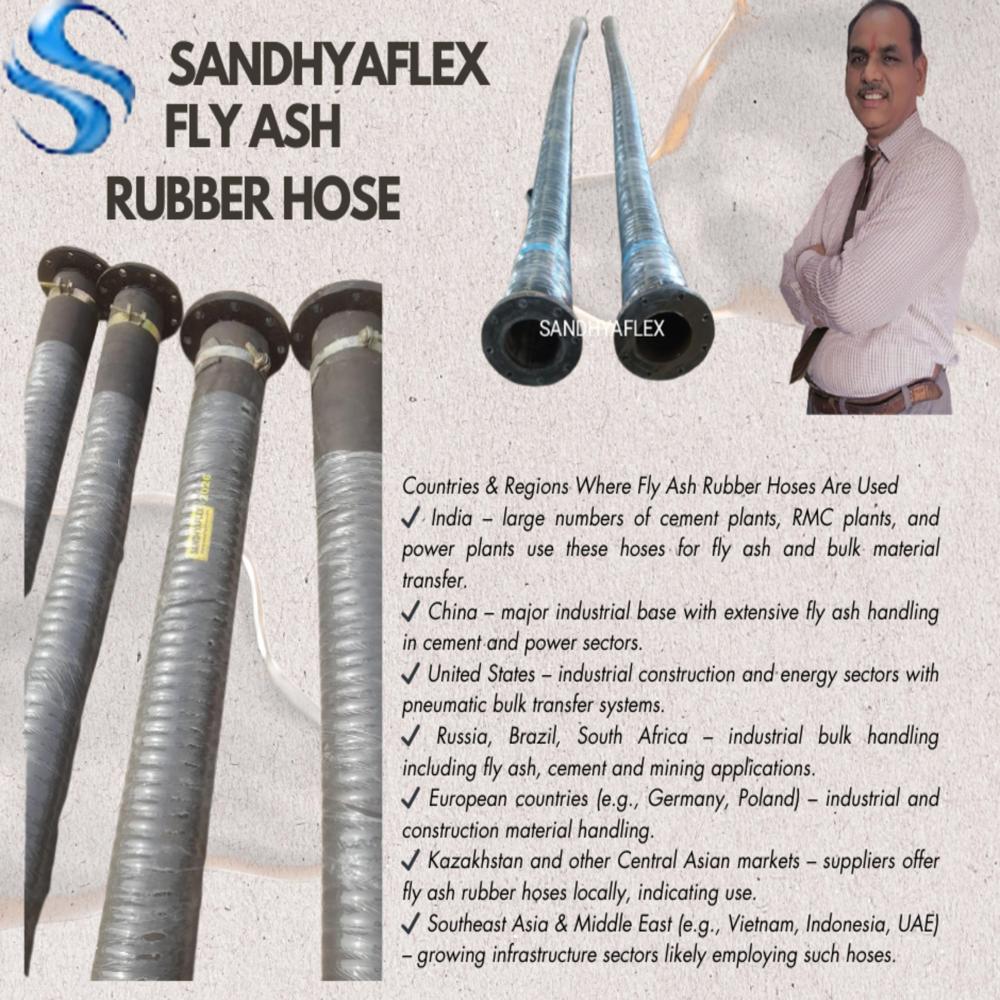
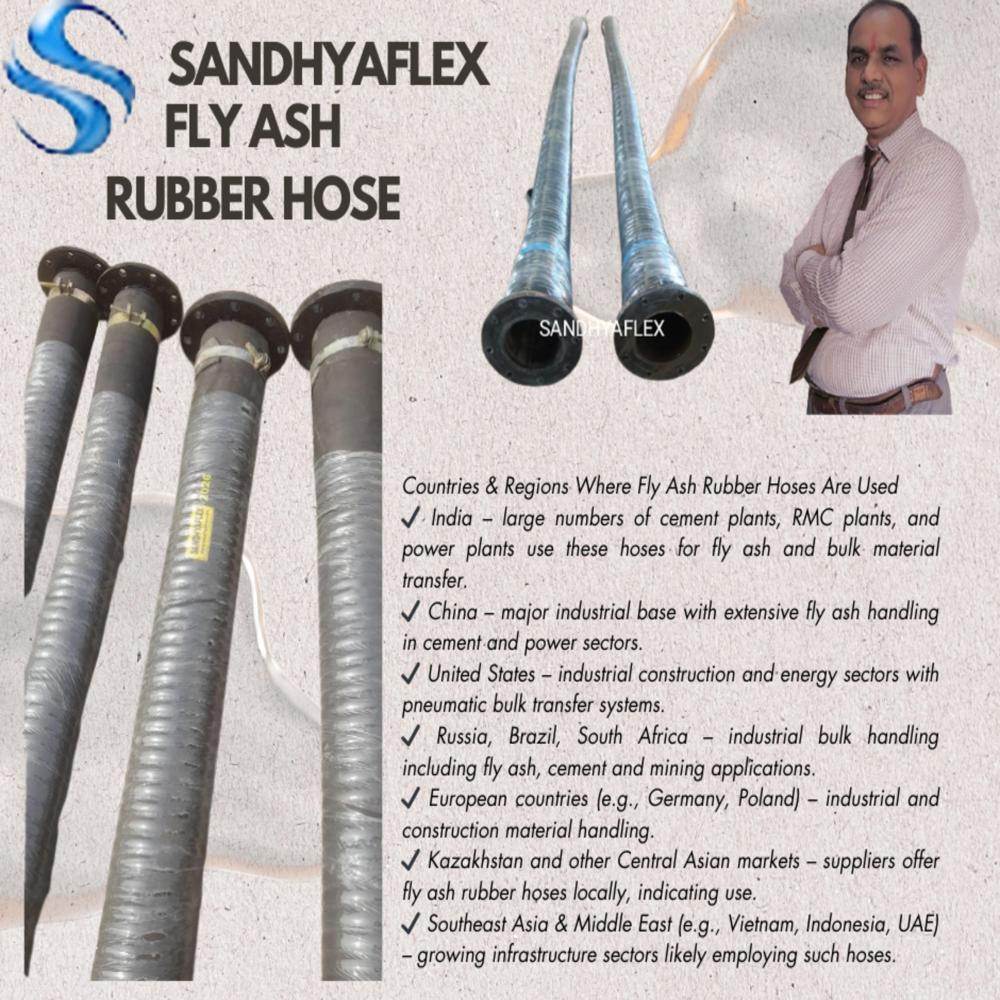
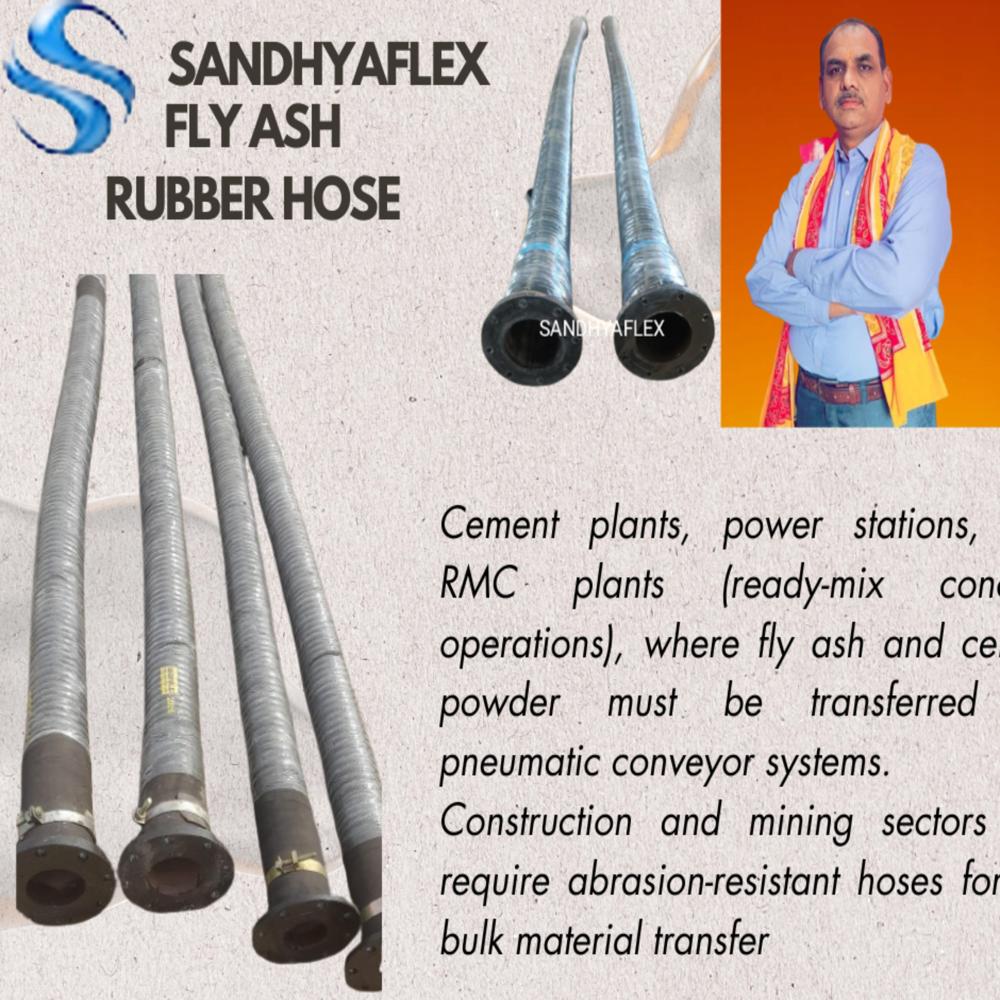
Fly Ash Rubber Hose is a heavy-duty flexible hose used to transfer fly ash, cement, lime, sand, and other abrasive dry materials in cement plants, power plants, and RMC batching plants. These hoses are designed for suction and discharge operations under pressure or vacuum conditions. (vnmehtahydraulics.com)
Example Fly Ash Rubber Hose Products
Fly Ash Rubber Hose Black Industrial Hose
14,868
Round Fly Ash Rubber Hose Pipe
4,900
Cement Feeding Fly Ash Hose
450
Synthetic EPDM Fly Ash Hose Abrasion Resistant
59,500
Rubber Hose With Flange Industrial Grade
1,364.08
Main Applications
Fly ash rubber hose is widely used in:
-
Cement plants cement and fly ash transfer
-
Power plants fly ash conveying from boiler to silo
-
RMC batching plants cement feeding systems
-
Bulker unloading systems tanker to silo transfer
-
Construction sites dry bulk powder transfer
These hoses are essential for efficient and dust-free transport of abrasive bulk materials. (sandhyaenterprises.co.in)
Construction Details
1. Inner Tube:
-
Synthetic or natural rubber
-
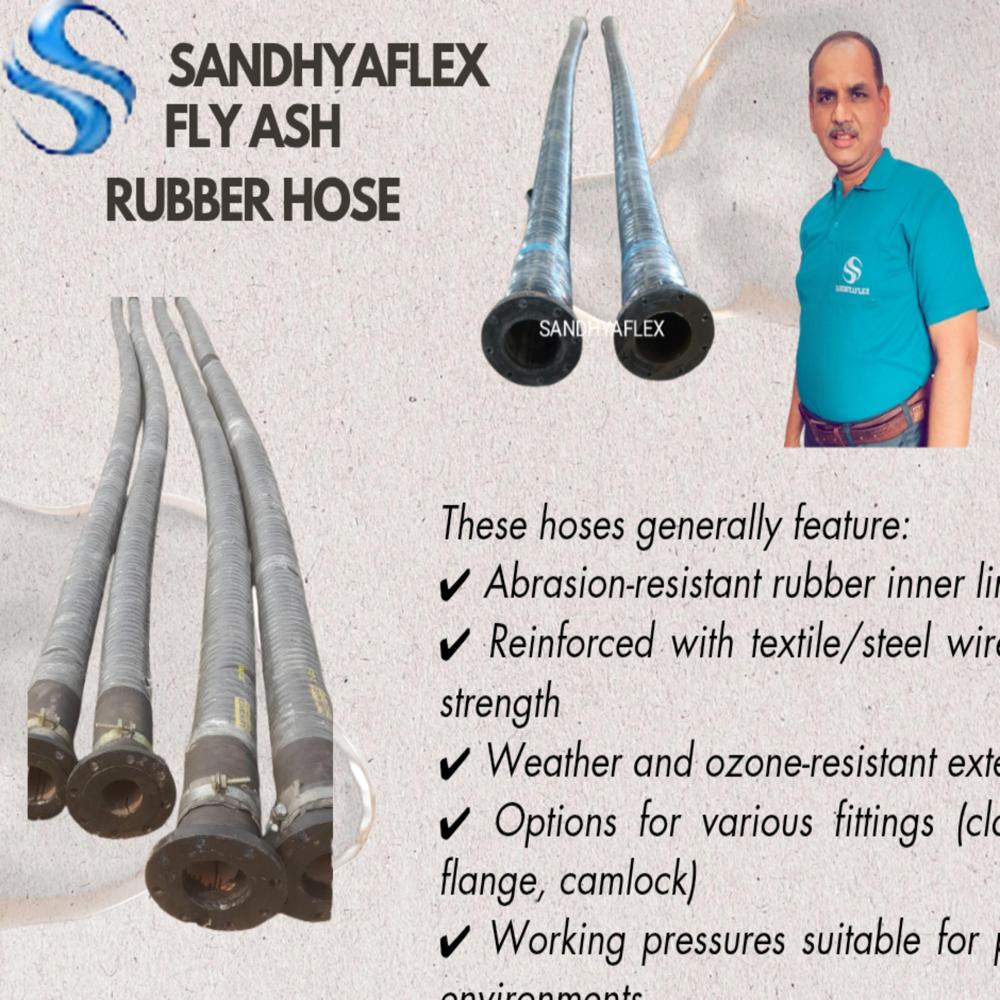
High abrasion resistance lining (swastikhose.com)
2. Reinforcement:
-
Textile cord reinforcement
-
High tensile steel wire helix for strength and flexibility (flexiblehoseindia.com)
3. Outer Cover:
-
Weather-resistant rubber
-
Corrugated or smooth finish
Technical Specifications
-
Size: 2 inch to 12 inch ID (Rubber Hose India)
-
Working pressure: 10 to 15 bar (arktuff.co.in)
-
Temperature range: 30C to +150C (sandhyaenterprises.co.in)
-
Length: Up to 15 meters or custom length (Jyoti Rubber Udyog India Ltd)
-
End fittings: MS flange, clamp, nipple
Key Features
-
High abrasion resistance
-
Heavy-duty and durable construction
-
Excellent flexibility
-
Anti-static and weather resistant
-
Long service life
-
Suitable for suction and discharge
Example: SANDHYAFLEX Fly Ash Rubber Hose
-
Size: 3" to 6" ID
-
Working Pressure: 1015 kg/cm
-
Temperature: Up to 150C
-
Application: Bulker unloading and cement transfer (sandhyaenterprises.co.in)
If you want, I can create a professional catalogue description, technical datasheet, or product brochure for SANDHYAFLEX Fly Ash Rubber Hose .
Precision Design for Cement Industry
Crafted with superior-grade rubber, this hose is purpose-built for fly ash transfer in cement industries. Its robust reinforcement with tire cord and helices wire ensures high tensile strength, resisting abrasion and preventing collapse under pressure. Rigid MS flanges guarantee leak-free, secure connections during heavy-duty operations.
Technical Excellence and Durability
Operating efficiently at up to 70C and 10 bar pressure, the hose maintains integrity and flexibility in demanding environments. Featuring a hardness of 60 Shore A and a round shape, it manages heavy air and fly ash flow while withstanding frequent handling and mechanical stress in industrial settings.
Comprehensive Distribution Across India
Available through a wide network of suppliers, fabricators, manufacturers, and dealers, this hose can be sourced by cement industry operators nationwide. Retailers, producers, and wholesalers ensure quick access, rapid delivery, and after-sales support, underpinned by a 6-month warranty to guarantee performance.
FAQ's of Fly Ash Rubber Hose:
Q: How is the Fly Ash Rubber Hose installed with the MS flange connection?
A: The MS flange connection type is designed to allow easy and secure attachment to industrial equipment. Installation involves aligning the flanges on the hose and equipment, securing them with bolts, and ensuring a tight, leak-proof seal. It is recommended to use appropriate gaskets and follow manufacturer guidelines for optimal performance.Q: What advantages does the 60 Shore A hardness provide for cement industry applications?
A: A 60 Shore A hardness ensures that the hose remains flexible yet resistant to abrasion and deformation, balancing durability with ease of handling. This hardness is ideal for transporting abrasive materials like fly ash, as it helps the hose withstand constant movement and high flow rates without significant wear.Q: When should the hose be inspected or replaced to ensure safety and longevity?
A: Regular inspections should be conducted every few months, focusing on areas near flanges, bends, and the hose cover for signs of wear, cracks, or leaks. Replace the hose if you notice significant abrasion, reduced flexibility, or compromised reinforcement to ensure safe, efficient operation.Q: Where is this rubber hose typically used within the cement industry?
A: This hose is primarily used in pneumatic conveying systems for fly ash transfer, handling discharge from silos, and connecting to various industrial machinery that process or transport ash and cement materials. Its robust construction makes it suitable for unyielding worksite conditions common in cement plants.Q: What is the process for maintaining the Fly Ash Rubber Hose?
A: Maintenance involves regular visual inspections, cleaning the exterior to remove dust and build-up, checking flange bolts for tightness, and ensuring the hose is not twisted or kinked during use. Proper storage and avoiding chemical contact also extend its lifespan.Q: How does the reinforcement with tire cord and helices wire benefit industrial users?
A: The combination of tire cord and helices wire reinforcement gives the hose enhanced structural integrity, allowing it to resist internal pressure and external physical stresses. This reinforcement adds flexibility while preventing the hose from collapsing or kinking during heavy-duty operation.Q: What are the benefits of choosing this hose from Indian suppliers or manufacturers?
A: Purchasing from local Indian suppliers ensures timely delivery, competitive pricing, and access to technical support. The broad network of dealers and wholesalers enables convenient sourcing, and the 6-month warranty provides assurance of quality and after-sales services.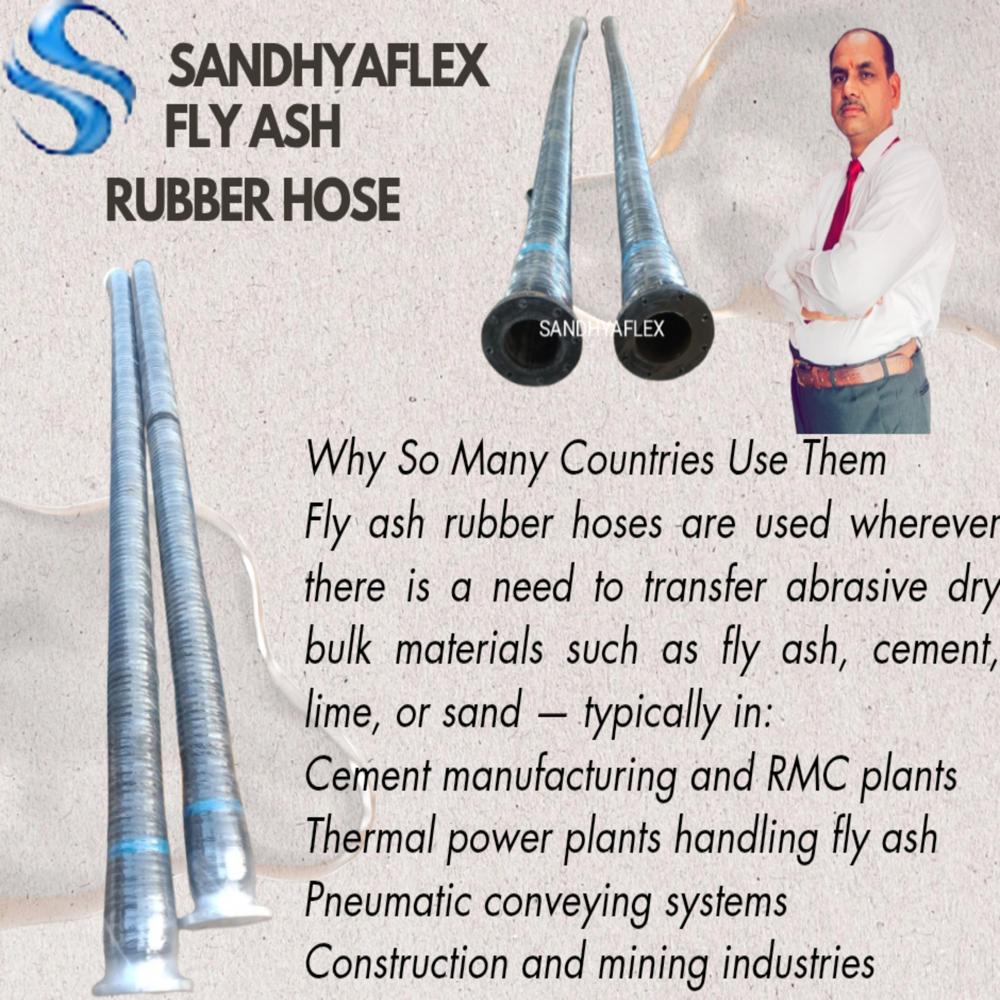
Tell us about your requirement

Price:
Quantity
Select Unit
- 50
- 100
- 200
- 250
- 500
- 1000+
Additional detail
Mobile number
Email

More Products in Cement Feeding Rubber Hose Category

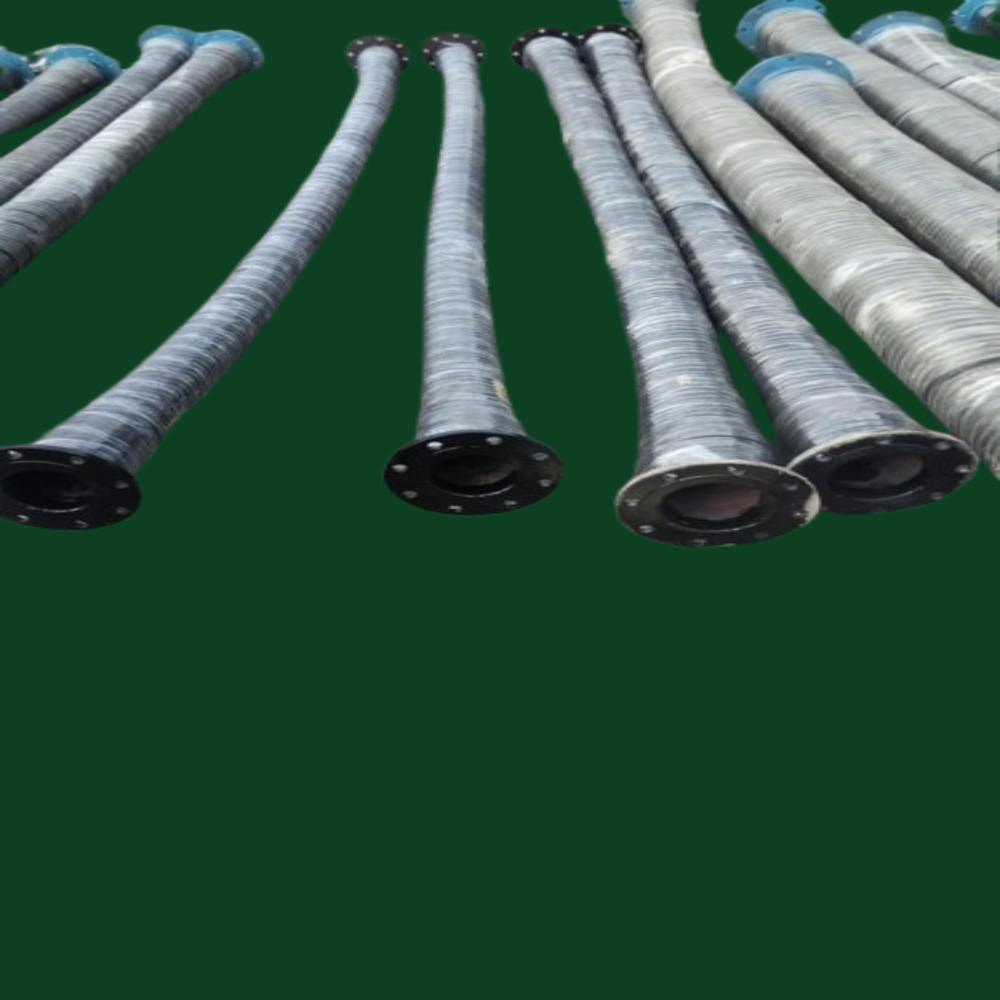
Cement Feeding Rubber Hose
Price 1600.0 INR / Meter
Minimum Order Quantity : 1 Meter
Hardness : 60
Temperature : 70 Celsius (oC)
Connection Type : MS Flange
Medium : Air
Cement Feeding Rubber Hose
Price 1800.0 INR / Meter
Minimum Order Quantity : 10
Hardness : 605 Shore A
Temperature : 30C to +80C Celsius (oC)
Connection Type : Flanged/Plain
Medium : Other
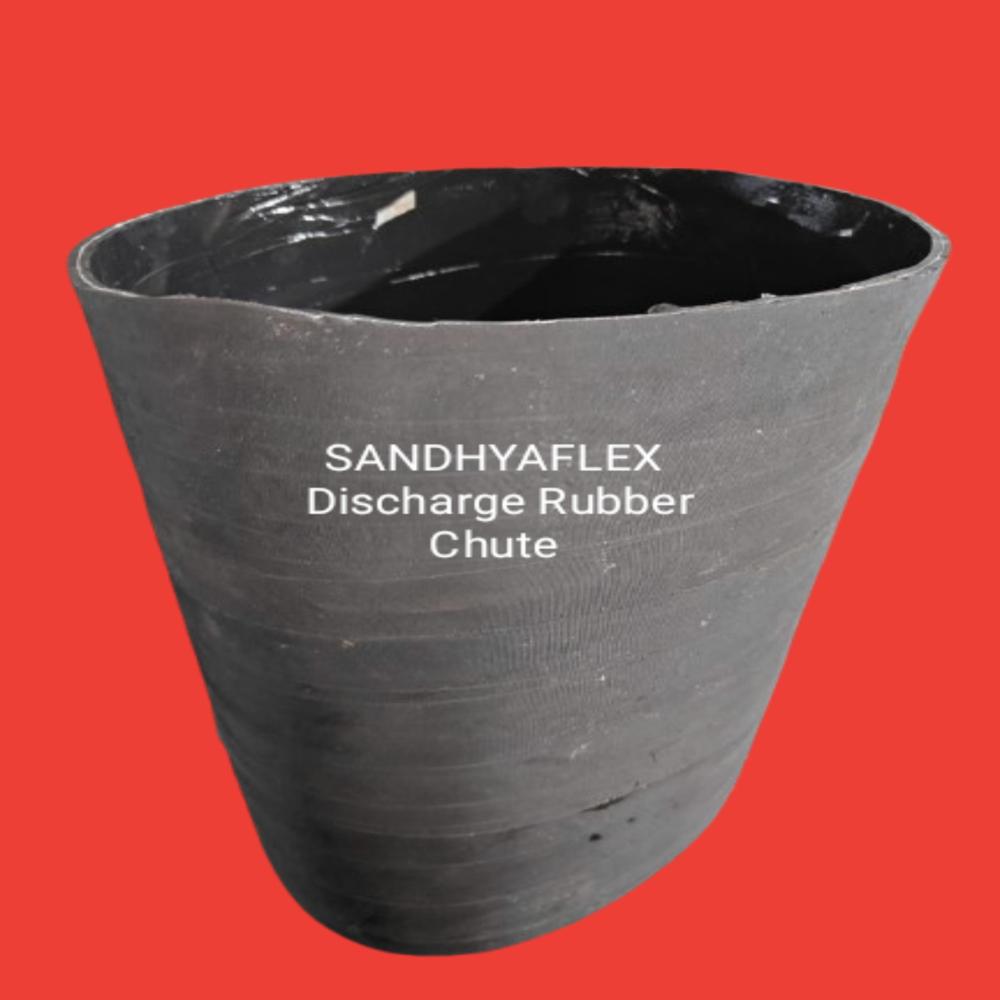
Discharge Rubber Chute
Price 500.0 INR / Number
Minimum Order Quantity : 1 Number
Hardness : 55 ot 60 Shore A
Temperature : 80 Celsius (oC)
Connection Type : Clamp
Medium : Air
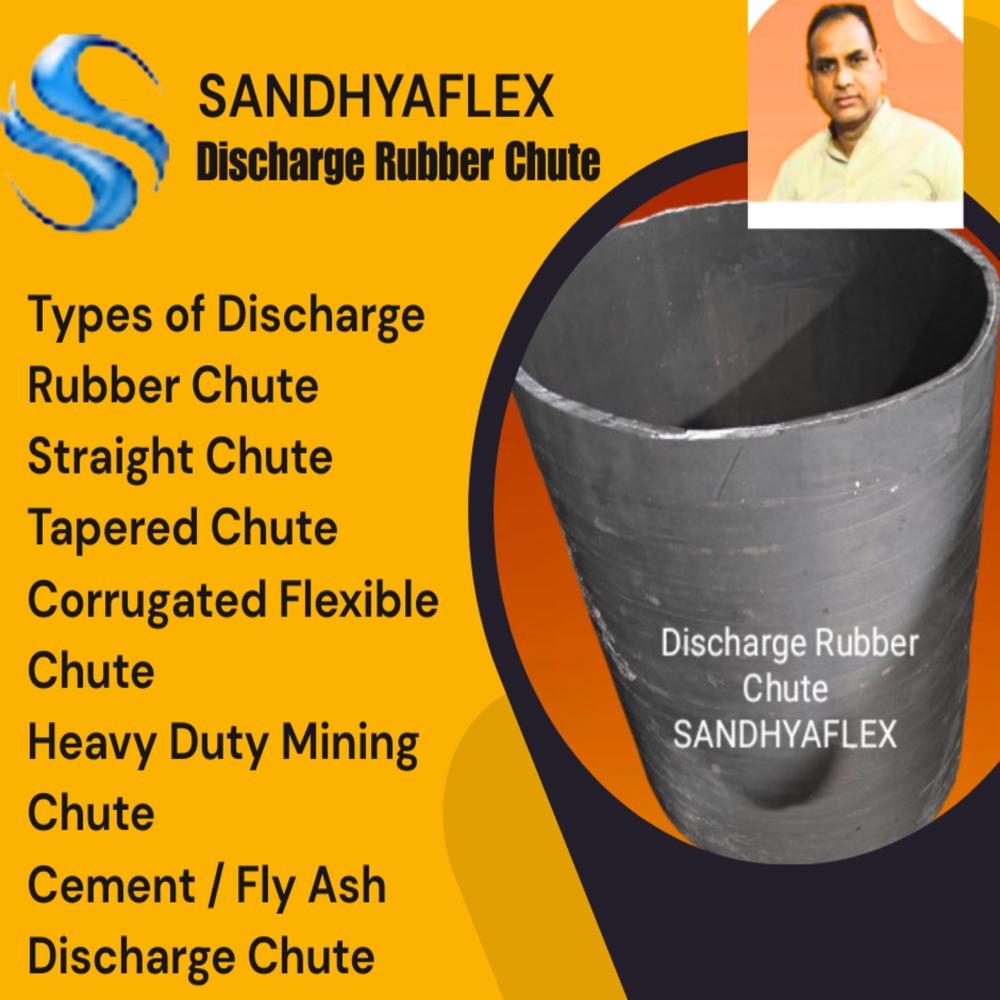
Rubber Discharge Chute
Price 6000.0 INR / Number
Minimum Order Quantity : 1 Number
Hardness : 65 5 Shore A
Temperature : 20C to 80C
Connection Type : Bolt Flange
Medium : Other, Slurry, Water, Fine Aggregates


 Send Inquiry
Our Products
- PVC Water Stopper
- Rubber Gaskets
- Industrial Rubber Hoses
- Elastomeric Bridge Bearing
- Bellow And Expansion Joint
- Drainage Spout
- LDPE Sheets
- Speed Breaker
- PVC Granules
- PVC Water Bar
- Rubber Products
- Tie Rod
- Braided Pipe
- Bridge Expansion Joint
- Dam Gate Seal
- pvc water stopper
- Cement Feeding Rubber Hose
- Slurry Rubber Hose
- Water Suction and Discharge Rubber Hose
- Oil Suction and Discharge Rubber Hose
- Water Swellable Bar
- Electrical Insulating Mat
- Dewatering Rubber Hose
- Strip Seal Expansion Joint
- Pot PTFE bridge Bearing
- Expansion joint Filler Board
- PVC Foot Step
- Curing Hessian Cloth
- Vibrating Screen Rubber Beading
- Carbon Free Rubber Hose
- Rubber corner guard


24-1223/8/A, AMBEDKAR NAGAR, Gajularamaram,Hyderabad - 500055, Telangana, India

Mr Mithilesh Chaudhary
(Proprietor)
Mobile :08071781474
 Send Inquiry
 Send SMS
Developed and Managed by Infocom Network Private Limited.
