
Call us now :08071781474
 Send Inquiry

 Send Inquiry
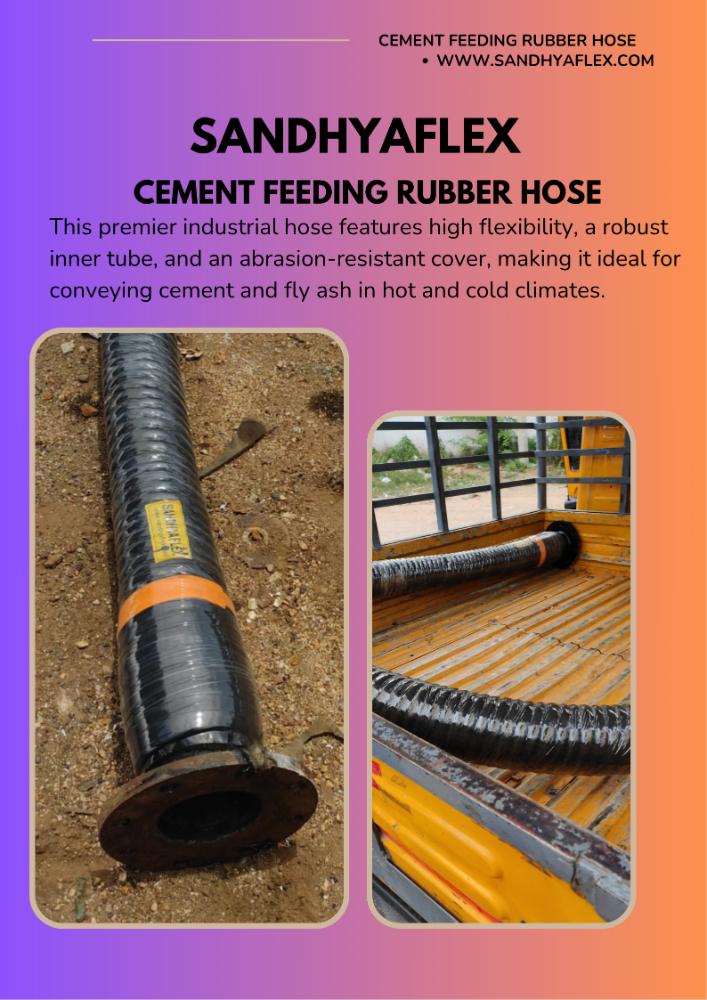
Cement Feeding Rubber Hose
Price 2500.0 INR/ Meter
Cement Feeding Rubber Hose Specification
- Medium
- Other
- Shape
- Round / Cylindrical
- Cover
- Weather and abrasion resistant synthetic rubber
- Reinforcement
- Multiple plies of high strength synthetic fabric with steel wire helix
- Connection Type
- Flanged / Plain Ends
- Hardness
- 70 5 Shore A
- Usage
- Industrial
- Material
- Other
- Size
- 5 inch
- Height
- NA Meter (m)
- Temperature
- -30C to +80C Celsius (oC)
- Pressure
- 10 Bar (150 PSI) PSI
- Product Type
- RMC
- Weight
- 7 Kilograms (kg)
- Inside Diameter
- 51 mm to 152 mm Millimeter (mm)
- Color
- Ash
- Outside Diameter
- 63 mm to 170 mm Millimeter (mm)
- Length
- 5 Meter (m)
- Width
- 125 Millimeter (mm)
- Warranty
- NA
- Applicable Standard
- IS 446 / IS 5382
- Inner Tube Material
- Abrasion resistant rubber
- Bursting Pressure
- 30 Bar (450 PSI)
- End Connection
- MS Flange / CI Flange / Plain
- Working Temperature
- -20C to +70C
- Length
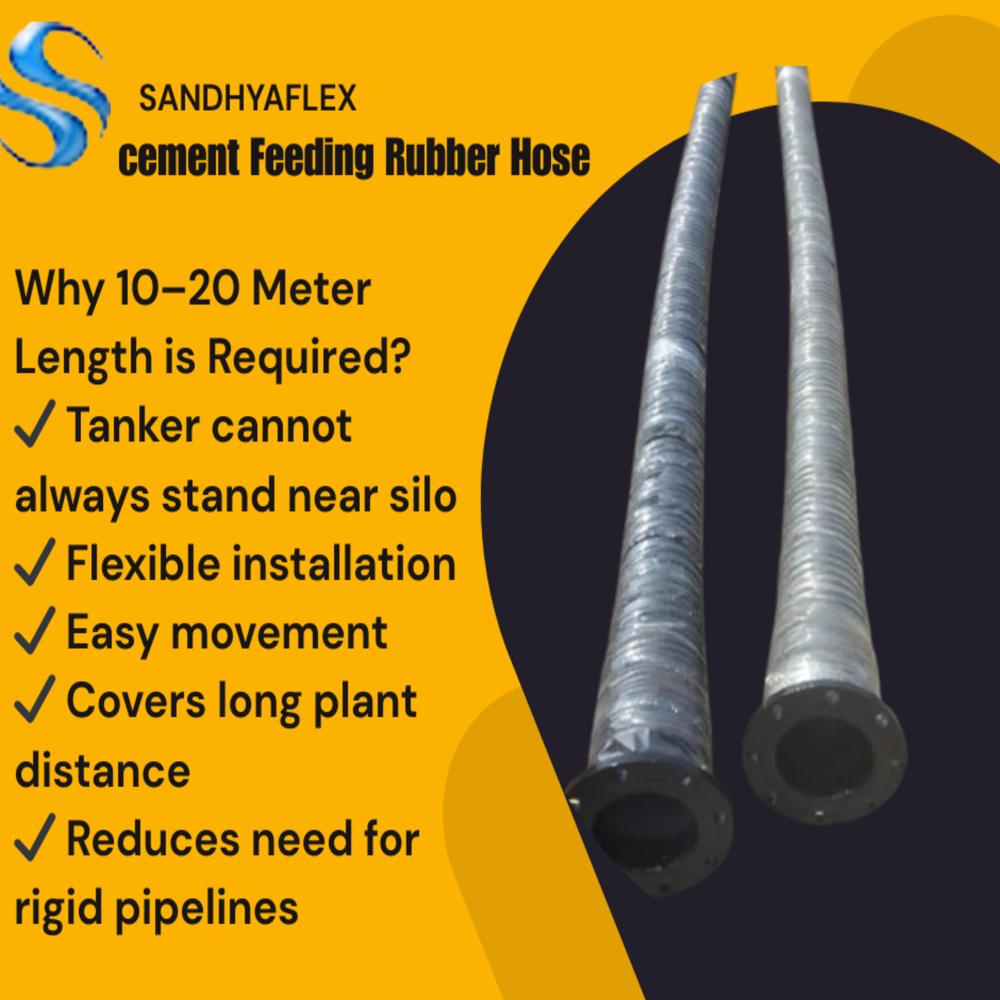
- Up to 18 meters
- Color
- Black
- Usage
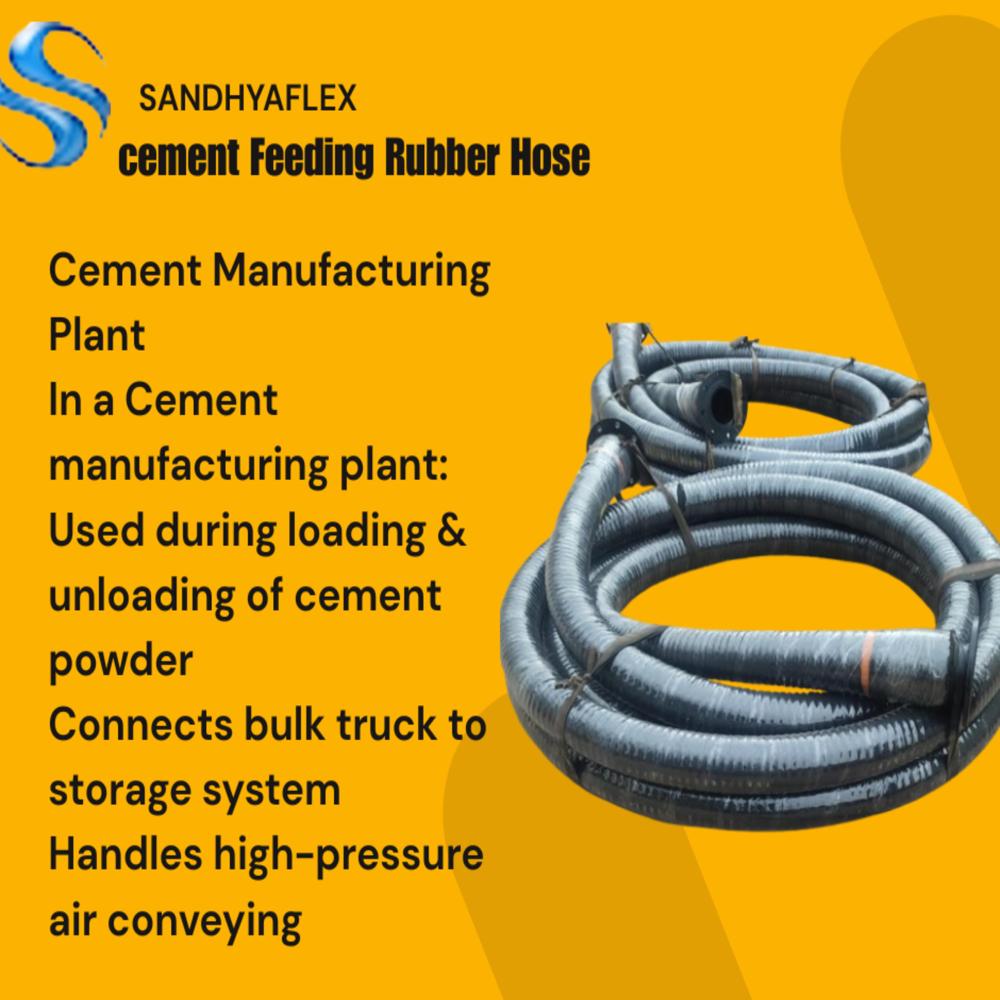
- Silo feeding, cement unloading, pneumatic conveying system
Cement Feeding Rubber Hose Trade Information
- Minimum Order Quantity
- 10 Meter
- Delivery Time
- 7 Days
About Cement Feeding Rubber Hose
Cement Feeding Rubber Hose
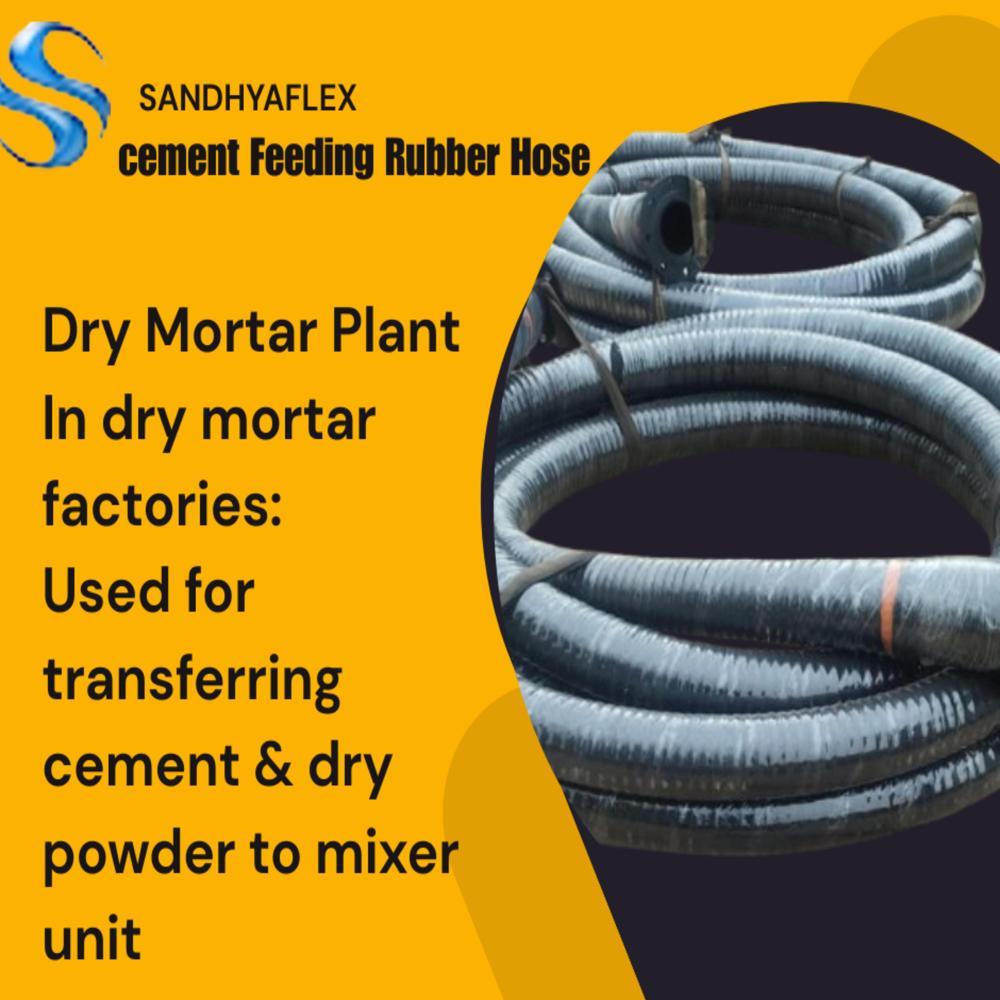
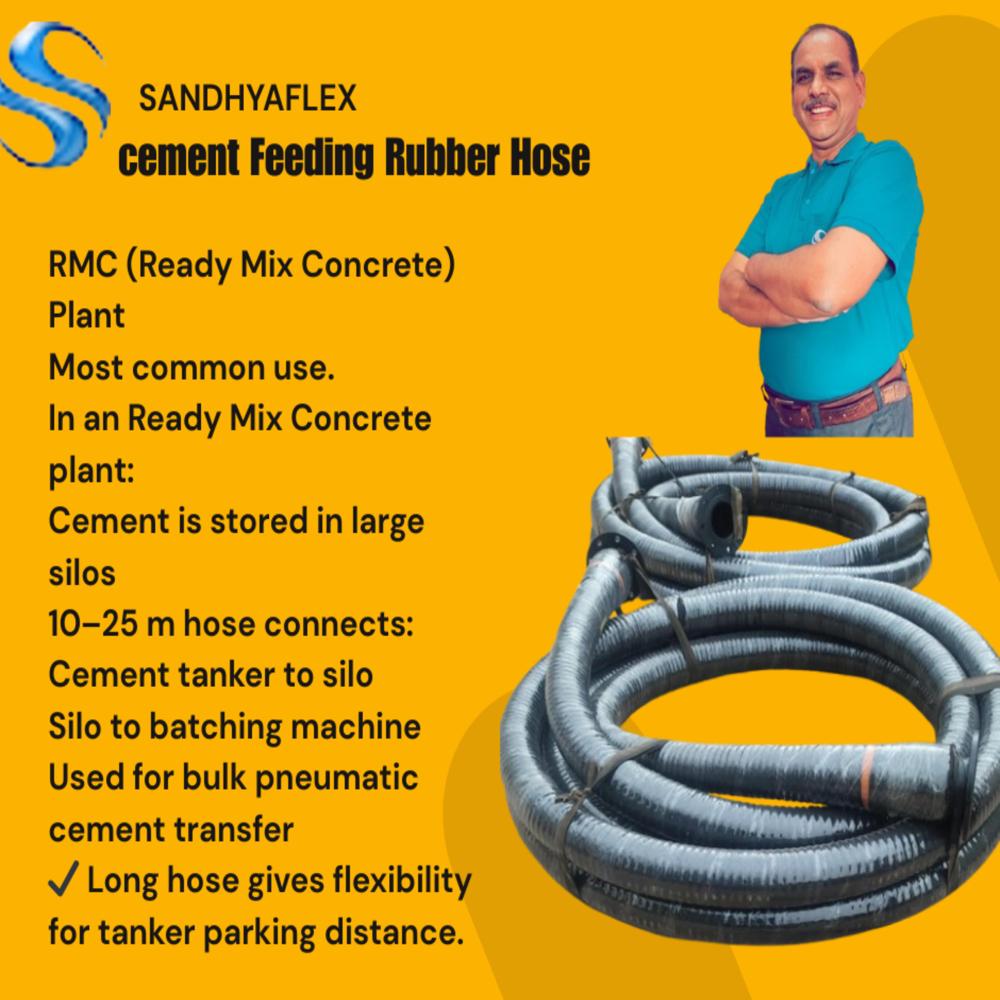
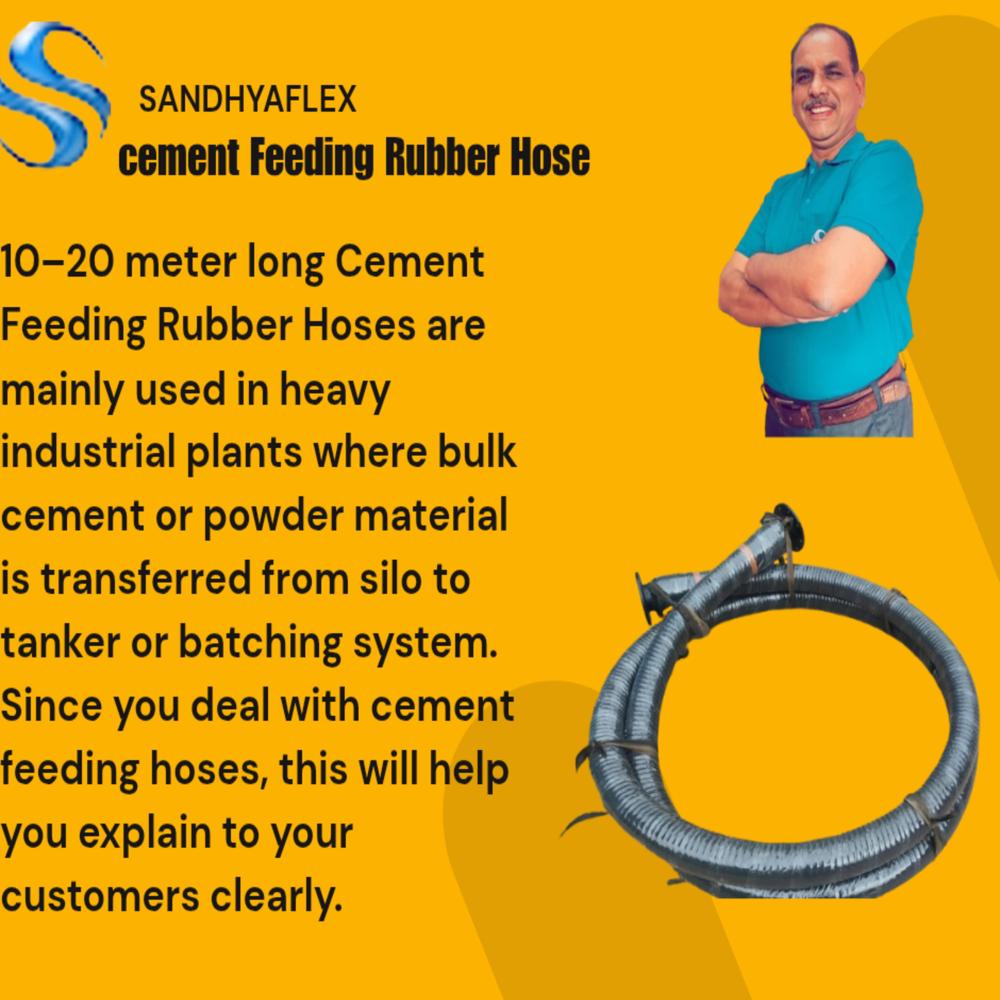
A Cement Feeding Rubber Hose is a flexible industrial hose used to transfer dry cement or powdered materials from silos, tankers, or compressors to batching plants or construction equipment.
It is specially designed to handle high-pressure air conveying of cement powder.
Main Features
-
Abrasion-resistant inner rubber lining for cement powder
-
High flexibility for easy handling
-
Reinforced with textile or steel wire layers
-
Anti-static and weather resistant
-
Long service life in heavy-duty use
Common Sizes
Cement feeding hoses are available in different internal diameters:
-
50 mm (2 inch)
-
75 mm (3 inch)
-
100 mm (4 inch)
-
125 mm (5 inch)
-
150 mm (6 inch)
Typical length: 3 m, 6 m, 10 m, or more depending on the plant requirement.
Where It Is Used
Cement feeding rubber hoses are widely used in:
-
RMC (Ready Mix Concrete) Plants
-
Cement factories
-
Construction sites
-
Bulk cement tanker unloading
-
Fly ash transfer systems
End Fittings
The hose can be supplied with different end fittings:
-
Flange fitting
-
Clamp fitting
-
Camlock coupling
-
Plain end (without fitting)
Advantages
-
Smooth cement powder flow
-
Prevents leakage and dust loss
-
Flexible and easy to install
-
Handles high air pressure conveying
If you want, I can also help you create:
Full product specification for Sandhyaflex Cement Feeding Rubber Hose
Website product description
YouTube video script to promote this hose.
Engineered for Cement Handling Applications
This hose is specifically developed for silo feeding, cement unloading, and pneumatic conveying systems, ensuring efficient material transfer. Designed with user needs in mind, it provides outstanding protection against abrasive materials and adapts to a range of industrial setups, making it suitable for cement dealers, fabricators, manufacturers, and traders operating across India.
Durability and Compliance with Industry Standards
Manufactured using high-grade synthetic rubber and reinforced with synthetic fabric layers and steel wire helix, this hose exhibits excellent durability and long service life. It fulfills IS 446 / IS 5382 standards, guaranteeing quality and reliability. Its abrasion- and weather-resistant cover ensures stable performance under demanding conditions, including varying temperatures and pressures.
FAQ's of Cement Feeding Rubber Hose:
Q: How is the cement feeding rubber hose typically used in industrial applications?
A: This hose is primarily deployed in cement unloading, silo feeding, and pneumatic conveying systems, efficiently transferring dry bulk cement or similar materials while minimizing material losses and ensuring safe passage through robust construction.Q: What are the standard lengths and connection types available for this hose?
A: The hose is available in lengths up to 18 meters. End connections include MS flange, CI flange, or plain ends, providing flexibility for integration into various cement handling or pneumatic systems.Q: What benefits does the abrasion-resistant synthetic rubber offer in these hoses?
A: The abrasion-resistant synthetic rubber inner tube extends the hose's lifespan by withstanding harsh treatment from dry, abrasive bulk materials like cement. This reduces maintenance intervals and minimizes replacement costs for operators.Q: Where are these hoses most commonly installed?
A: These hoses are widely used in cement processing plants, at bulk storage silos, at construction sites, and in other industrial settings where efficient cement transfer and unloading are needed.Q: How does the hose meet industry safety and quality standards?
A: It is manufactured according to IS 446 and IS 5382, which dictate strict requirements for durability, tensile strength, and pressure handling, ensuring safety and quality in demanding environments.Q: What is the typical operational temperature and pressure range for this hose?
A: The hose can safely operate within temperature limits of -30C to +80C, with a working pressure of up to 10 Bar (150 PSI) and a bursting pressure of 30 Bar (450 PSI), making it suitable for a wide range of climate and pressure conditions.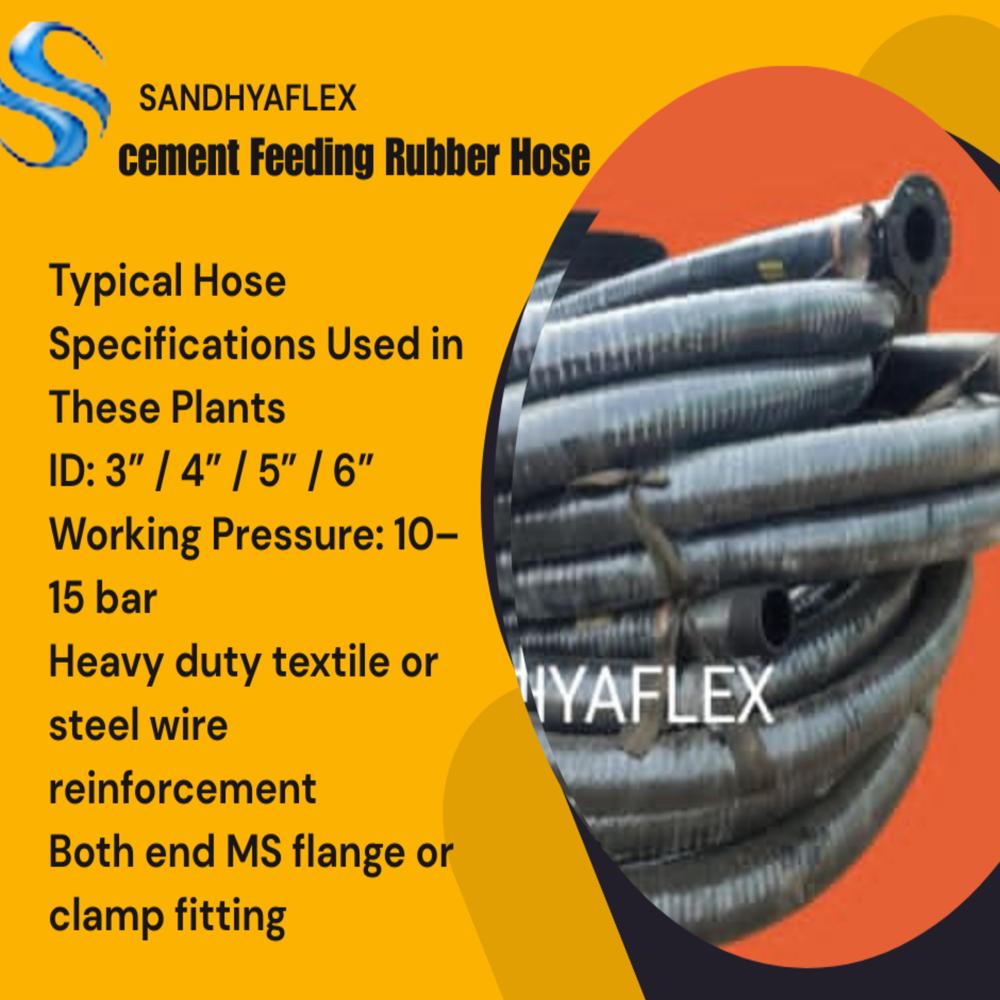
Tell us about your requirement

Price:
Quantity
Select Unit
- 50
- 100
- 200
- 250
- 500
- 1000+
Additional detail
Mobile number
Email

More Products in Cement Feeding Rubber Hose Category
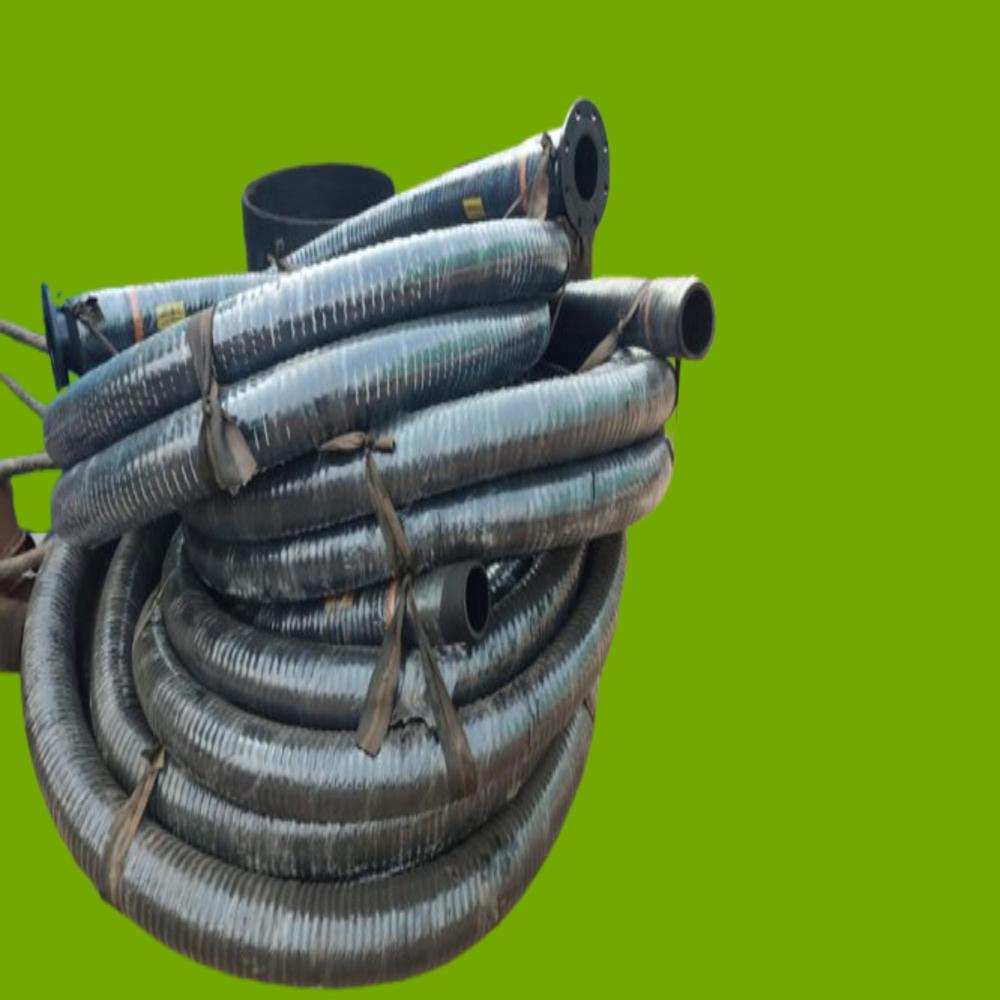
Fly Ash Rubber Hose
Price 2099.0 INR / Meter
Minimum Order Quantity : 1 Meter
Inside Diameter : 125 Millimeter (mm)
Material : Rubber
Hardness : 60 Shore A
Shape : Round
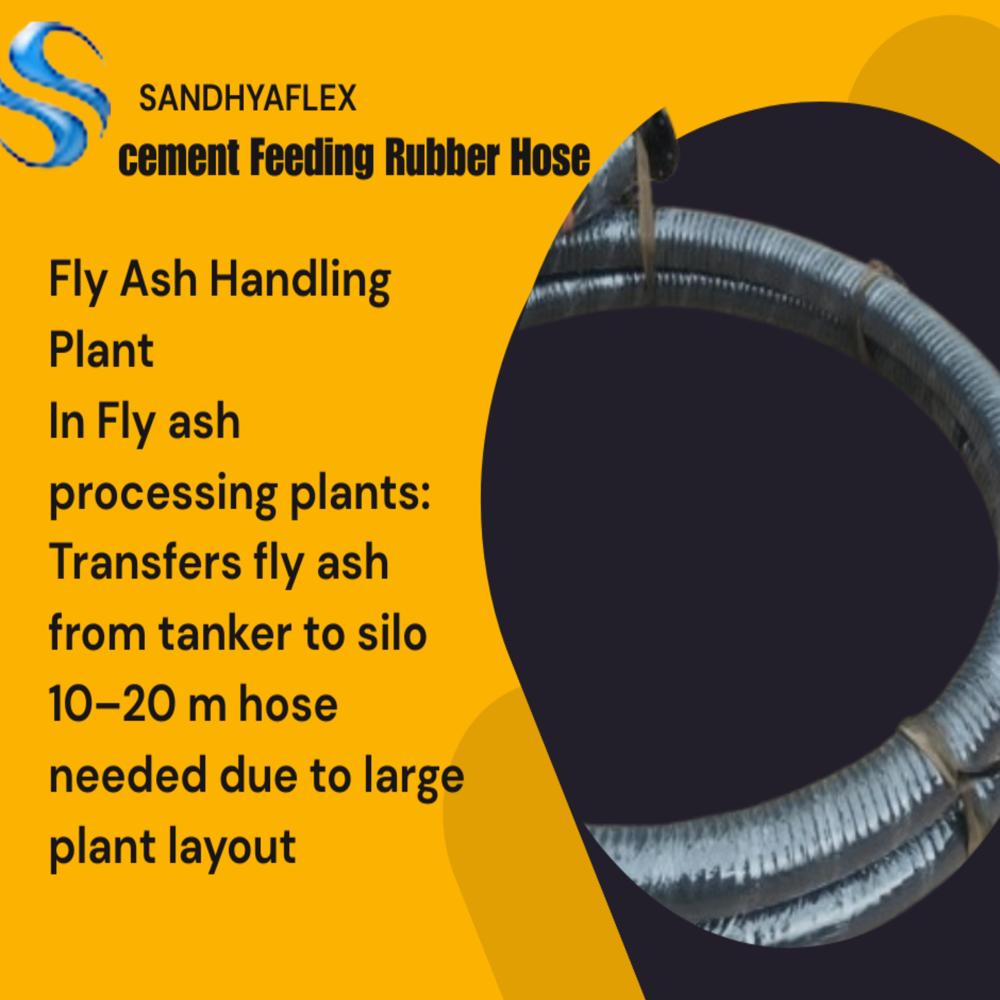
Cement Feeding Rubber Hose
Price 2599.0 INR / Meter
Minimum Order Quantity : 10
Inside Diameter : 51 mm to 152 mm (2 inch to 6 inch) Millimeter (mm)
Material : Other
Hardness : 65 5 Shore A
Shape : Straight

Cement Feeding Rubber Hose
Price 1600.0 INR / Meter
Minimum Order Quantity : 1 Meter
Inside Diameter : 100 Millimeter (mm)
Material : Rubber
Hardness : 60
Shape : Round
Cement Feeding Rubber Hose
Price 2500.0 INR / Meter
Minimum Order Quantity : 5
Inside Diameter : 100 Millimeter (mm)
Material : Rubber
Hardness : NA
Shape : NA


 Send Inquiry
Our Products
- PVC Water Stopper
- Rubber Gaskets
- Industrial Rubber Hoses
- Elastomeric Bridge Bearing
- Bellow And Expansion Joint
- Drainage Spout
- LDPE Sheets
- Speed Breaker
- PVC Granules
- PVC Water Bar
- Rubber Products
- Tie Rod
- Braided Pipe
- Bridge Expansion Joint
- Dam Gate Seal
- pvc water stopper
- Cement Feeding Rubber Hose
- Slurry Rubber Hose
- Water Suction and Discharge Rubber Hose
- Oil Suction and Discharge Rubber Hose
- Water Swellable Bar
- Electrical Insulating Mat
- Dewatering Rubber Hose
- Strip Seal Expansion Joint
- Pot PTFE bridge Bearing
- Expansion joint Filler Board
- PVC Foot Step
- Curing Hessian Cloth
- Vibrating Screen Rubber Beading
- Carbon Free Rubber Hose
- Rubber corner guard


24-1223/8/A, AMBEDKAR NAGAR, Gajularamaram,Hyderabad - 500055, Telangana, India

Mr Mithilesh Chaudhary
(Proprietor)
Mobile :08071781474
 Send Inquiry
 Send SMS

Developed and Managed by Infocom Network Private Limited.
