
Call us now :08071781474
 Send Inquiry
 Send Inquiry
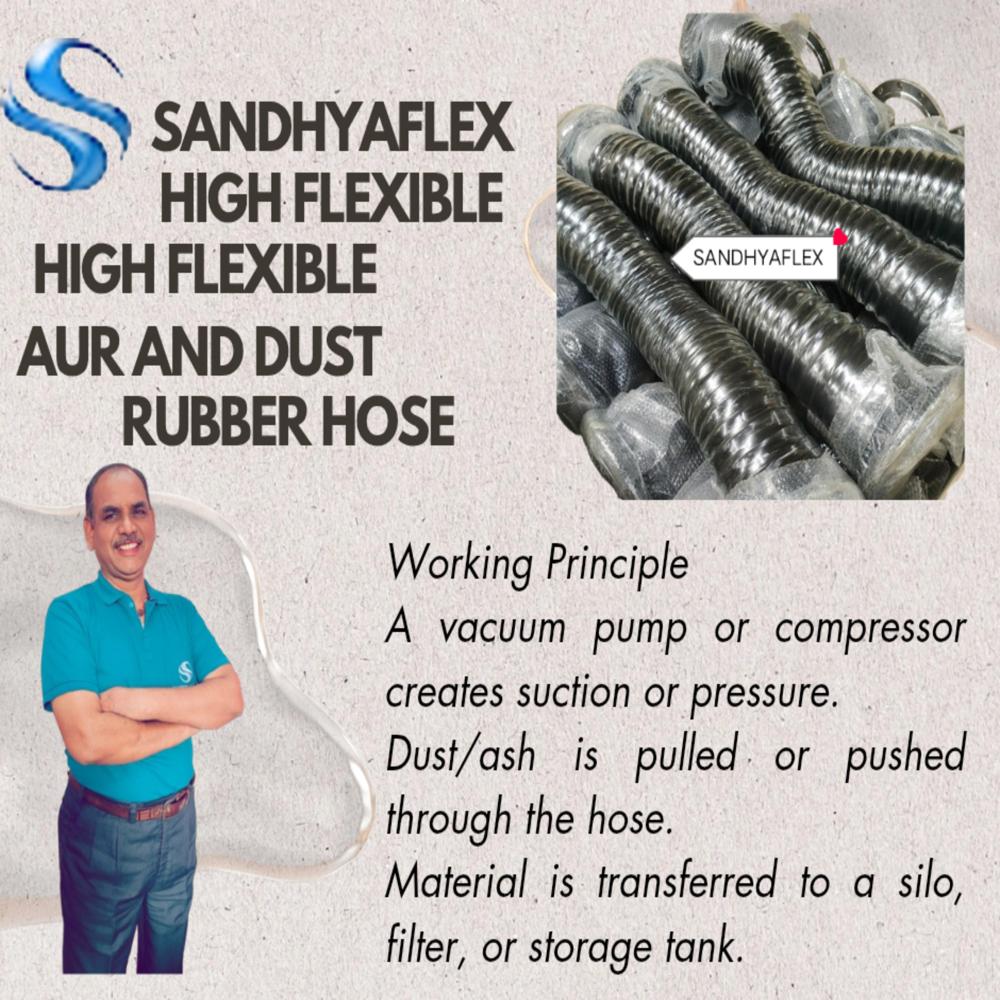
Air Dust Rubber Hose
MOQ : 1 Meter
Air Dust Rubber Hose Specification
- Shape
- Round
- Cover
- Weather and Abrasion Resistant Rubber
- Reinforcement
- High Strength Synthetic Textile
- Connection Type
- Plain/End Fittings
- Hardness
- 60-65 Shore A
- Medium
- Air, Dust
- Material
- Synthetic Rubber
- Temperature
- -30C to +80C
- Pressure
- 10-20 Bar
- Inside Diameter
- 6 mm to 25 mm
- Outside Diameter
- 12 mm to 35 mm
- Application
- Compressed Air and Dust Conveying
- Surface Finish
- Smooth
- Burst Pressure
- 35 Bar
- Length
- Up to 100 meters
- Color
- Black
- Flexibility
- High
Air Dust Rubber Hose Trade Information
- Minimum Order Quantity
- 1 Meter
- Delivery Time
- 7 Days
About Air Dust Rubber Hose
Air Dust Rubber Hose Industrial Overview
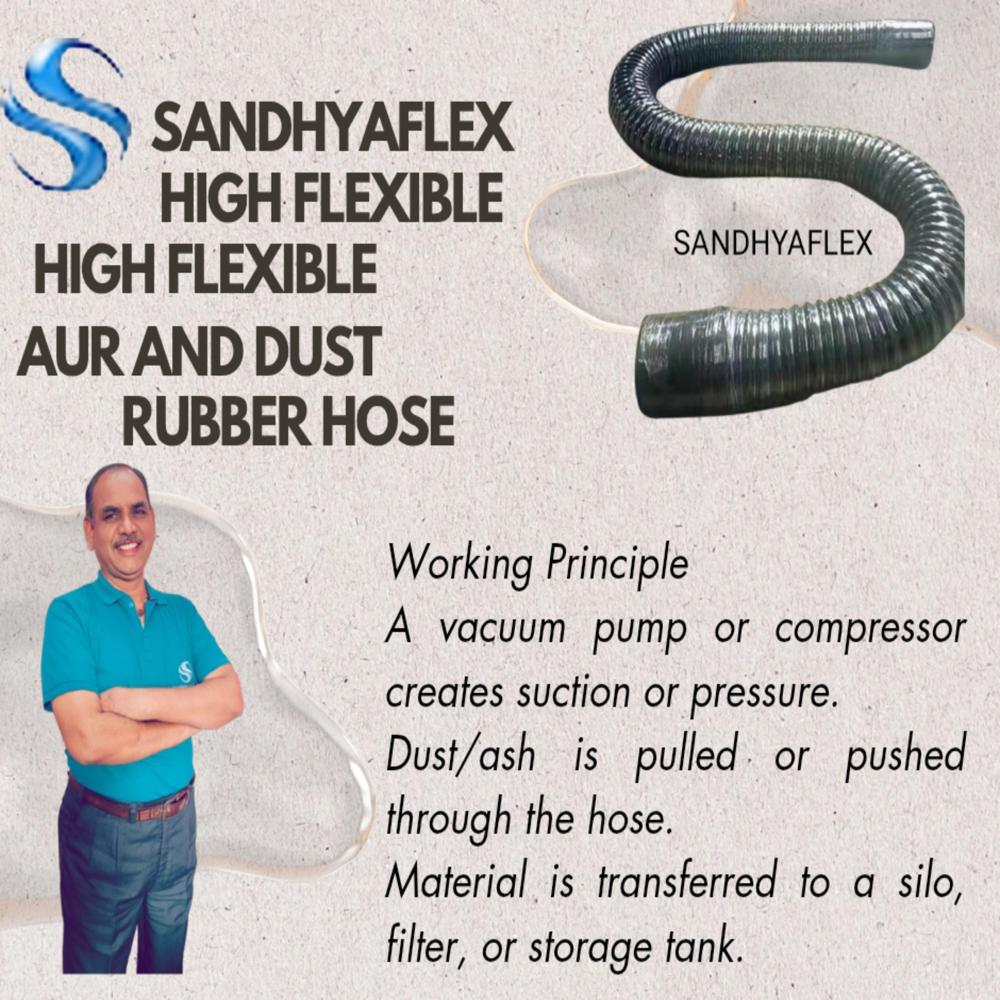
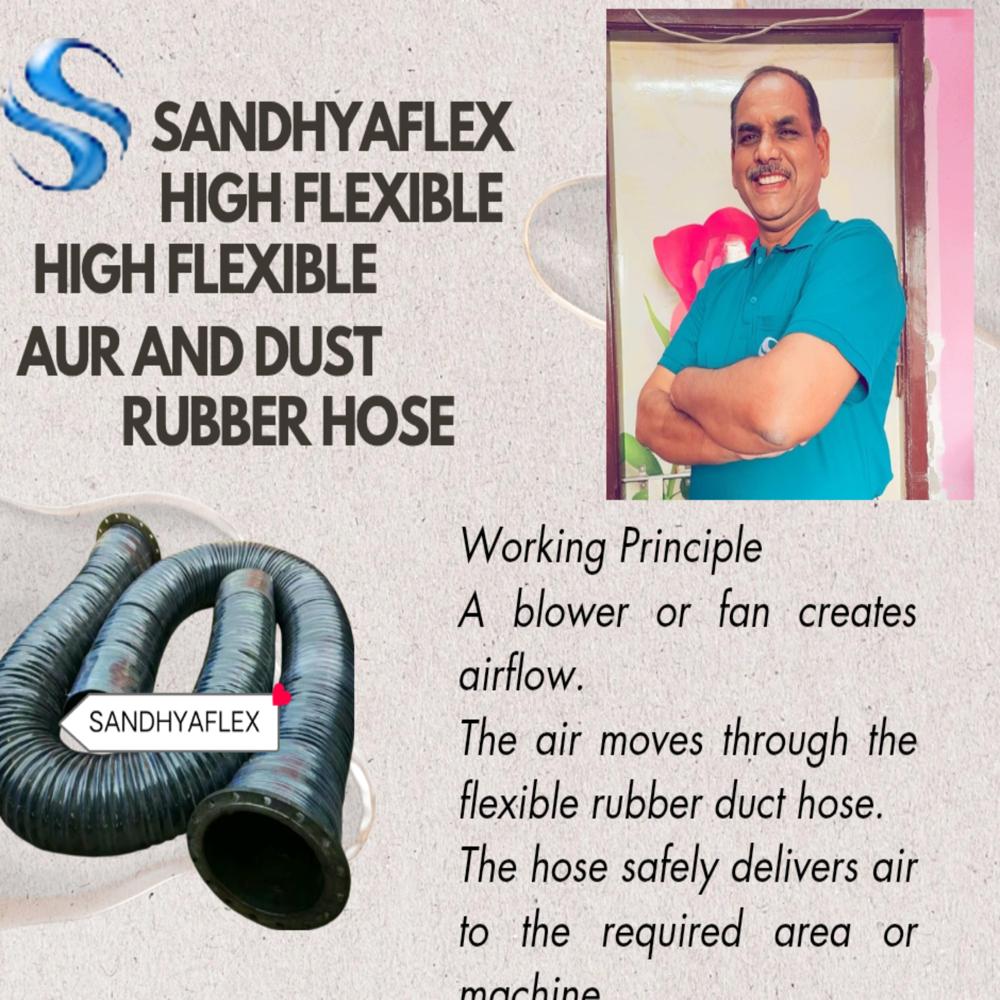
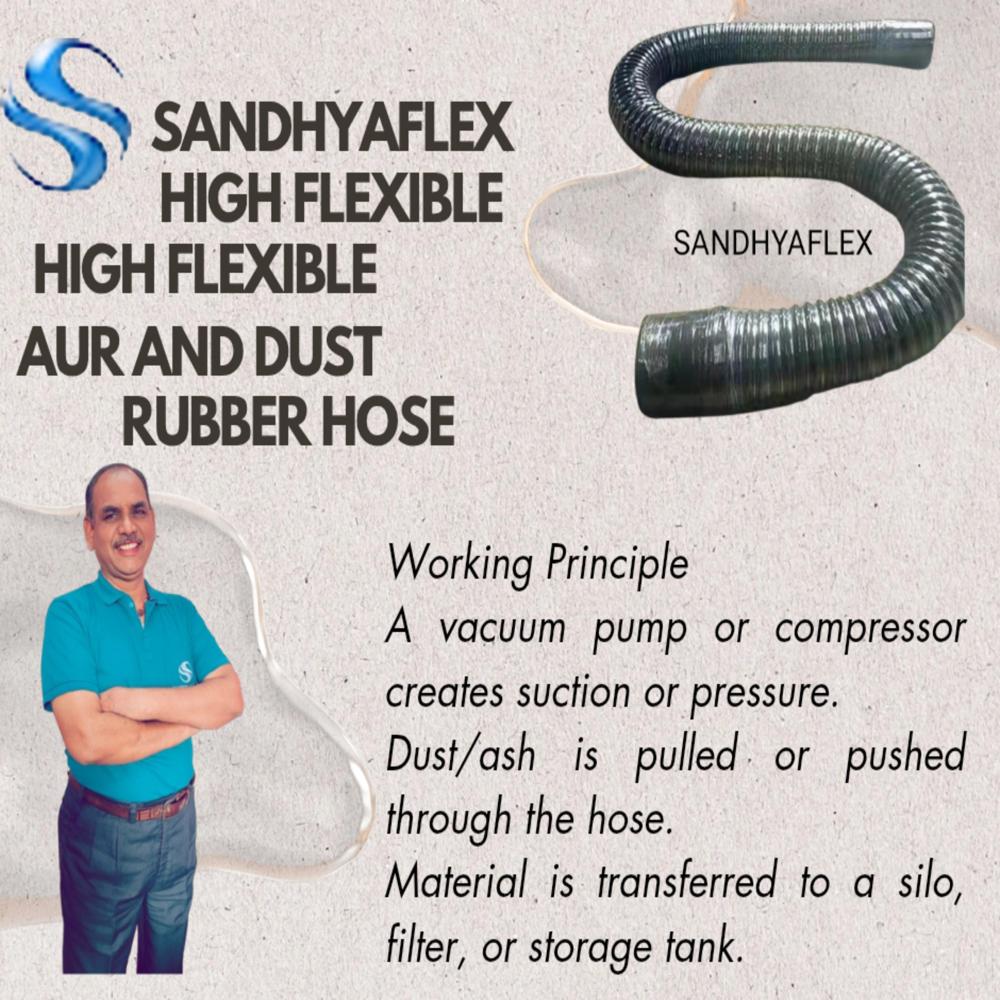
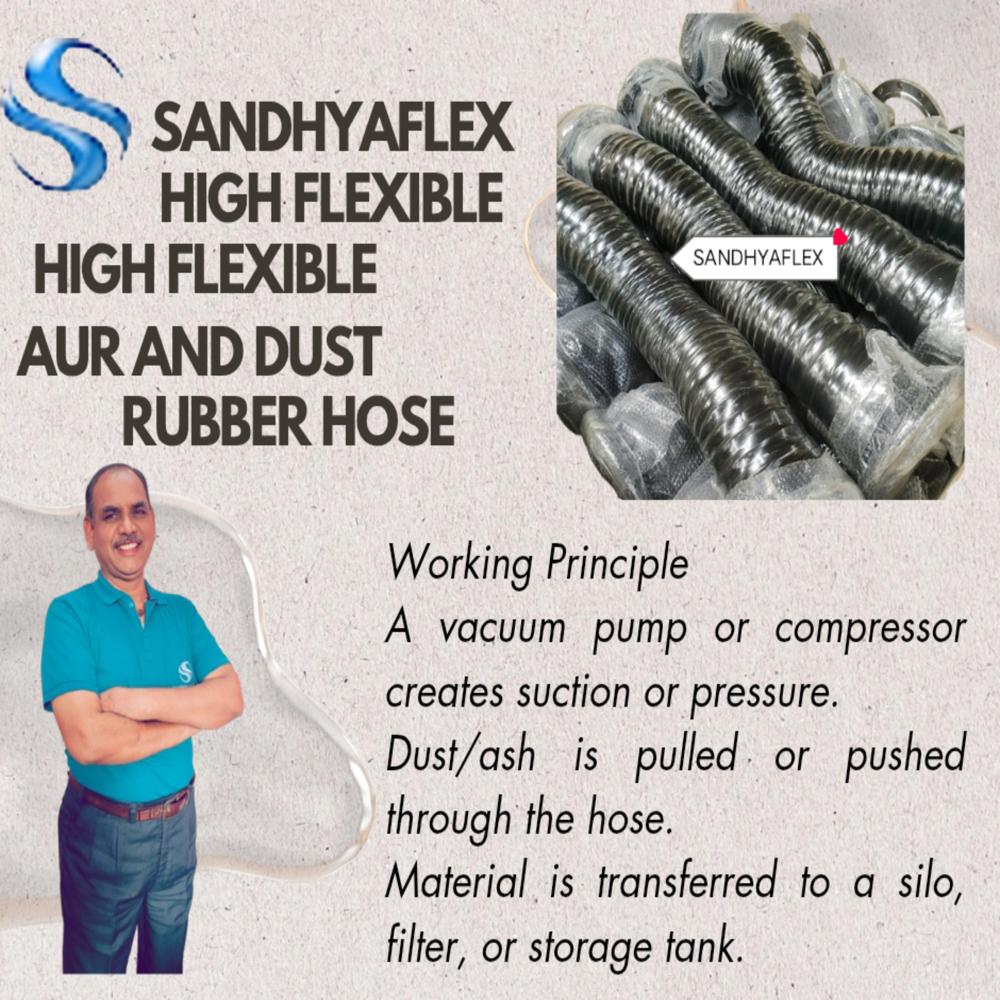
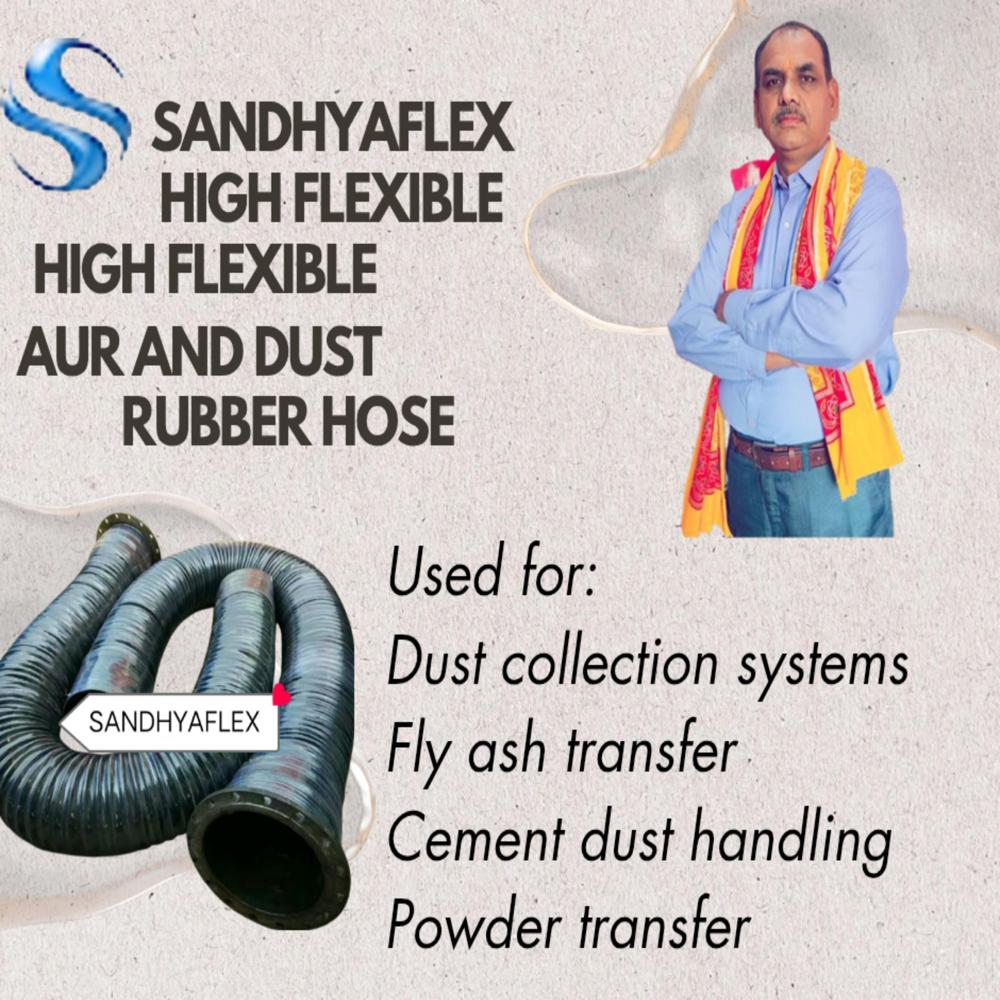
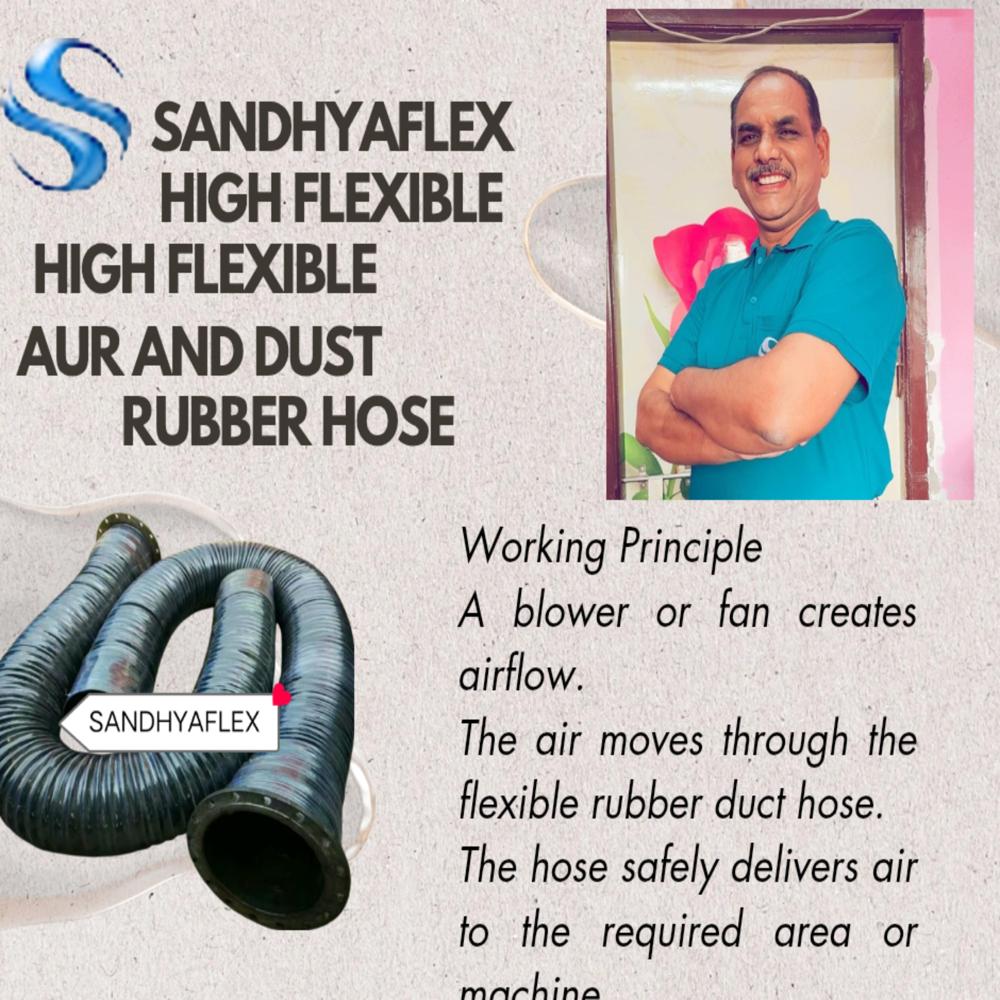
An Air Dust Rubber Hose is a flexible, corrugated rubber hose used for suction and transfer of air, dust, fumes, powder, and light abrasive particles in industrial applications such as cement plants, RMC plants, and dust collection systems.
Main Function
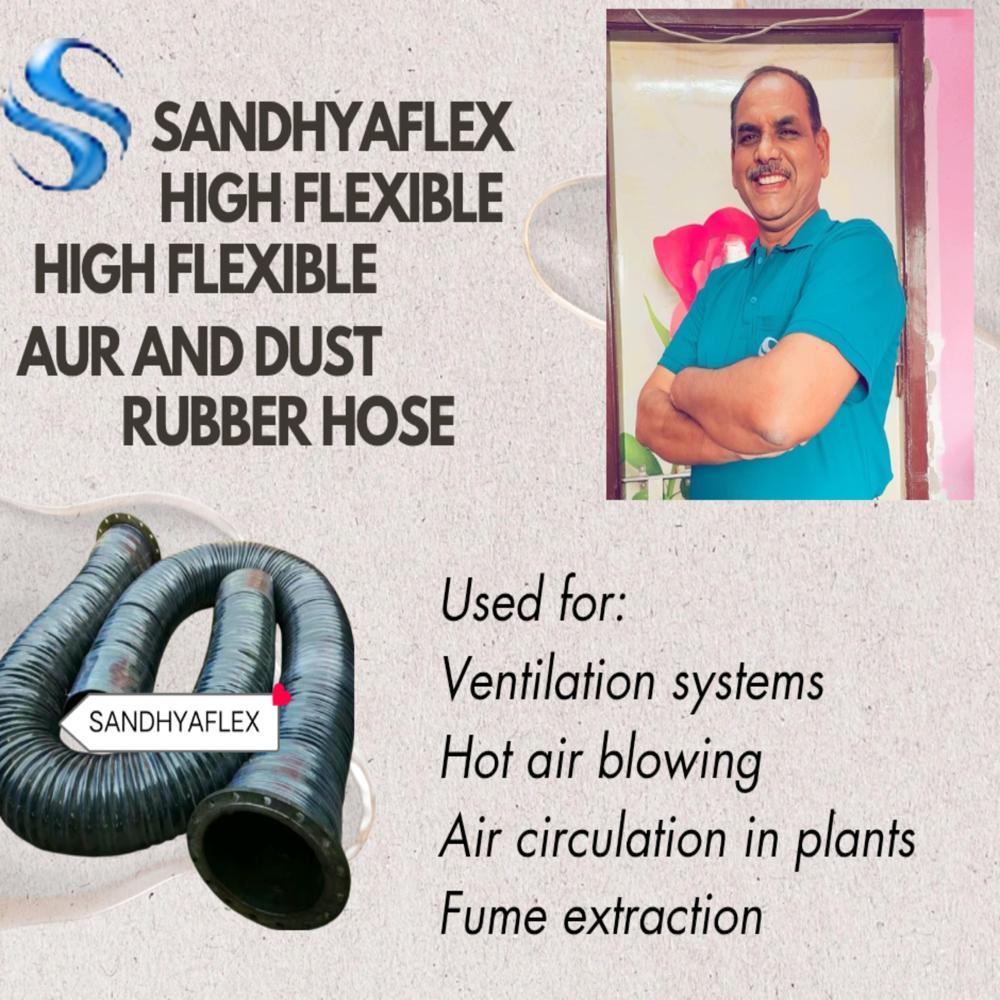
Air Dust Rubber Hose is used to:
-
Transfer dust and air from dust collectors
-
Connect blower to dust collection systems
-
Remove dust from cement and batching plants
-
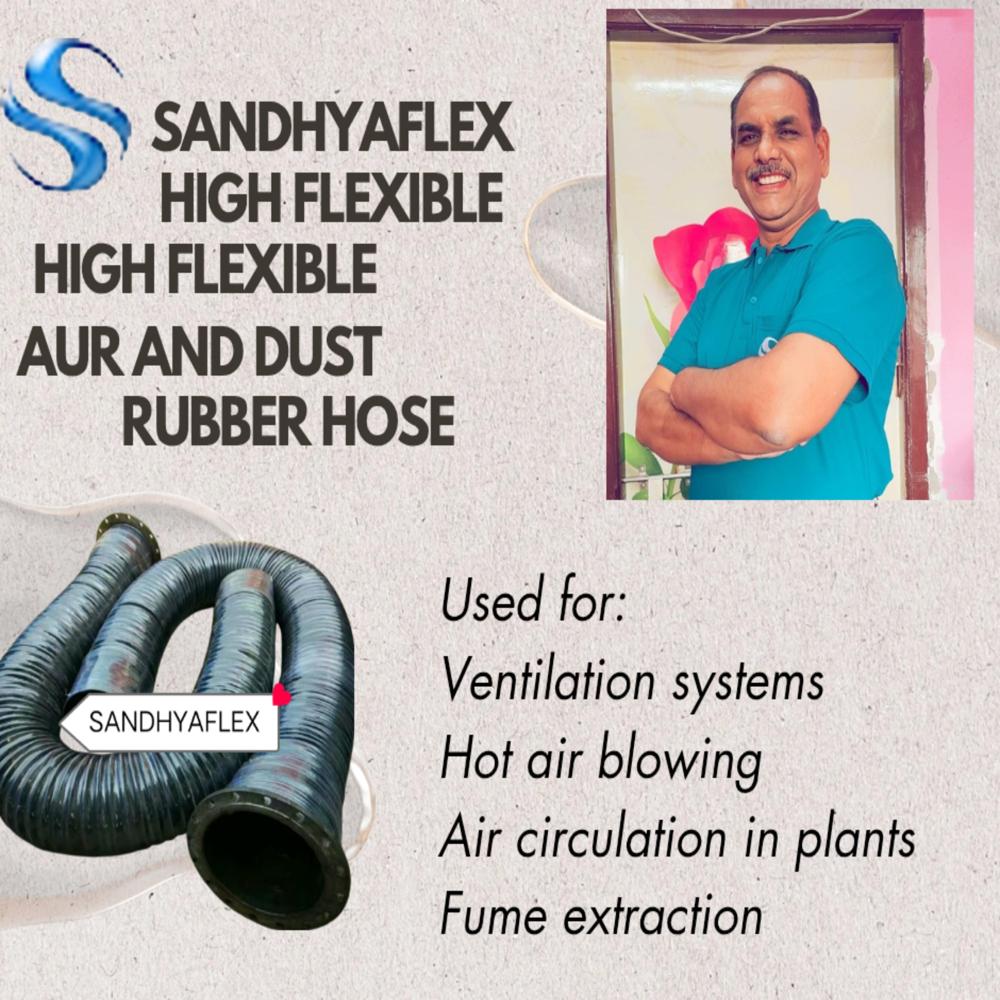
Ventilation and air suction systems
-
Industrial air pollution control systems
Construction Details
Inner Tube:
-
Natural rubber / EPDM rubber
-
Smooth and abrasion resistant
Reinforcement:
-
High tensile textile cord
-
Steel wire helix for flexibility and anti-collapse strength
Outer Cover:
-
Corrugated rubber cover
-
Weather, abrasion, and ozone resistant
Technical Specifications
-
Size range: 25 mm ID to 600 mm ID
-
Standard length: 6 meter or 10 meter
-
Temperature range: 20C to +80C
-
Type: Corrugated flexible rubber hose
-
End fitting: Plain end / MS flange / Clamp type
Applications
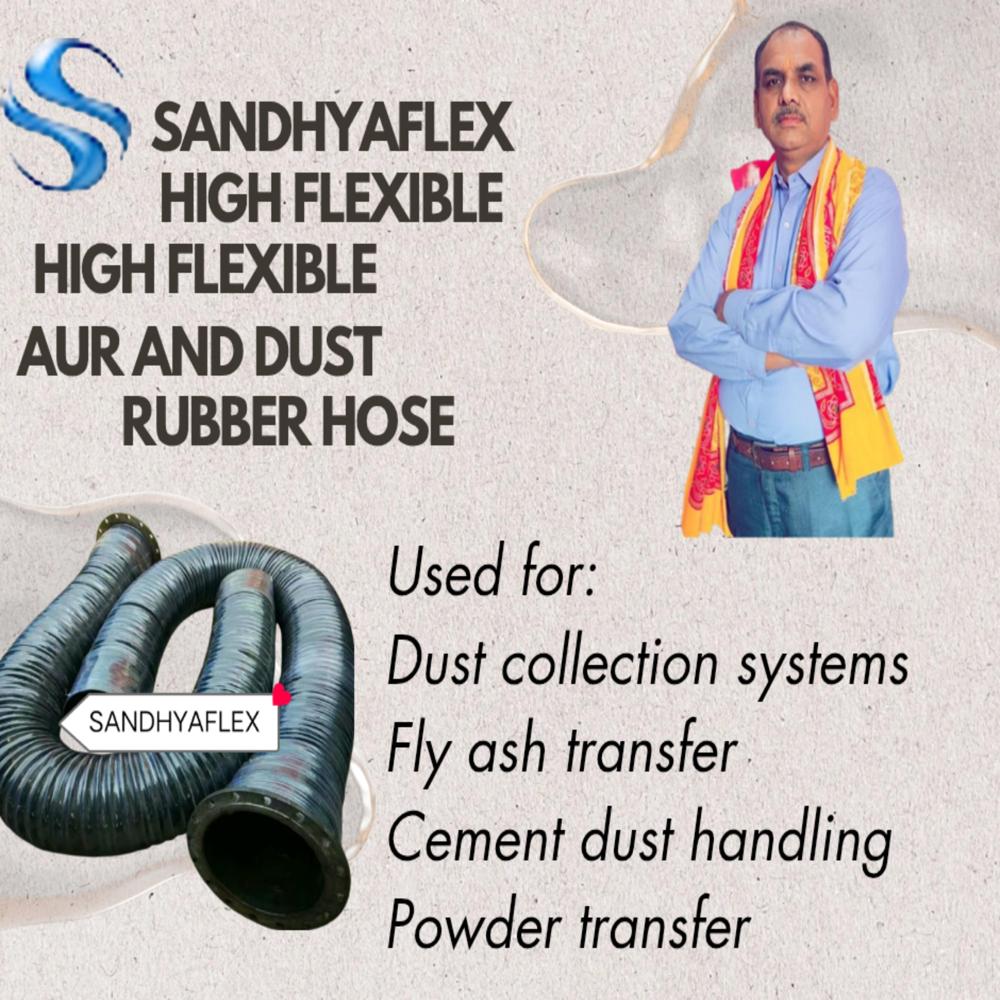
Widely used in:
-
Cement plants
-
RMC batching plants
-
Power plants
-
Mining industry
-
Dust collector systems
-
Industrial ventilation systems
Key Features
-
High flexibility for easy bending
-
Strong and durable construction
-
Excellent abrasion resistance
-
Long service life
-
Anti-static and weather resistant
-
Easy installation
Example: SANDHYAFLEX Air Dust Rubber Hose
-
Type: Corrugated flexible hose
-
Size: 100 mm to 400 mm ID
-
Length: 6 meter standard
-
Application: Dust suction and air transfer
-
Brand: SANDHYAFLEX
If you want, I can also create a catalogue-ready product description, technical datasheet, or brochure content for your Air Dust Rubber Hose .
Robust Construction and Superior Flexibility
The Air Dust Rubber Hose is crafted from high-quality synthetic rubber and reinforced with high-strength synthetic textile for exceptional durability. Its smooth, abrasion-resistant outer layer ensures lasting performance, while advanced flexibility enables easy handling even in tight spaces. Suitable for fluctuating weather and rough industrial settings, its robust design gives you confidence in both indoor and outdoor applications.
Versatile Applications for Industrial Needs
This hose is purpose-built for use with compressed air and dust, making it a versatile asset in factories, workshops, and construction. Its wide range of sizes and compatibility with plain or end fittings allow quick integration into multiple setups, supporting dealers, manufacturers, suppliers, and users across India. The high workload tolerance ensures reliability for daily demanding tasks.
FAQ's of Air Dust Rubber Hose:
Q: How should the Air Dust Rubber Hose be installed and connected?
A: The hose can be easily fitted using plain ends or standard end fittings, ensuring compatibility with most air compressor and dust collection systems. For secure operation, always choose fittings that match the inside diameter and pressure specifications of the hose being used.Q: What makes this rubber hose suitable for industrial compressed air and dust applications?
A: Engineered from synthetic rubber and reinforced with strong synthetic textile, this hose can handle pressures of 10-20 bar and a burst pressure up to 35 bar. Its resistance to weather, abrasion, and temperature extremes from -30C to +80C makes it ideal for rugged industrial environments and reliable for air and dust conveying.Q: Where can this hose be used effectively?
A: It is designed for use in factories, workshops, construction sites, and anywhere compressed air or dust conveying is needed. Its long length (up to 100 meters) and high flexibility allow it to be routed efficiently in complex or spacious setups.Q: What is the process for selecting the right hose size and specification?
A: Determine the desired working pressure (within 10-20 bar), temperature conditions, and required flow by matching the application's needs with available inside diameters (6-25 mm) and lengths. Consult the pressure rating, burst limit, and ensure the connection type fits your system.Q: What are the main benefits of choosing this high-flexibility rubber hose?
A: Key benefits include excellent flexibility for easy installation, durability against weather and abrasion, suitability for a wide temperature range, and compatibility with a variety of industrial air and dust systems. Its robust construction ensures a long service life even under harsh conditions.Q: When should the hose be inspected or replaced for optimal performance?
A: Regular inspections are recommended, especially in high-usage environments. Check for visible wear, cracks, or reduced flexibility. Replace the hose immediately if any damage or significant wear is detected to maintain safety and optimal airflow.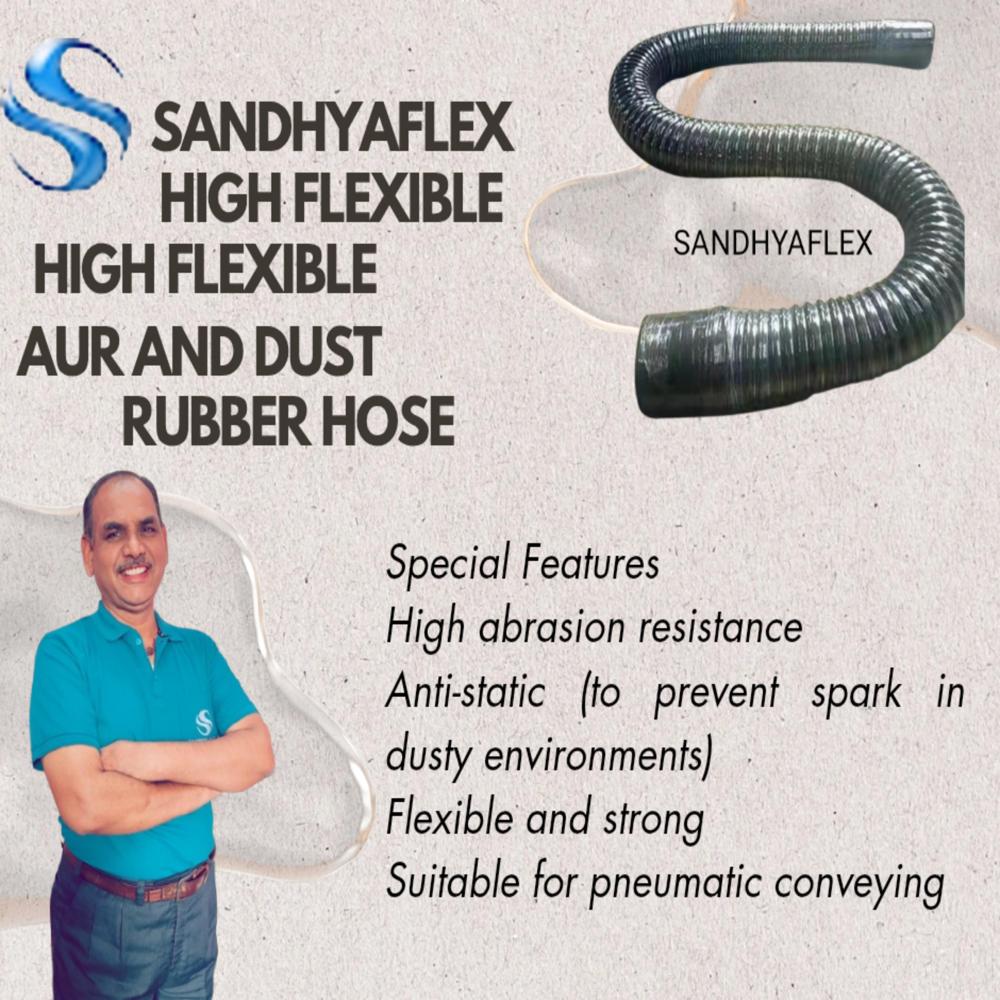
Tell us about your requirement

Price:
Quantity
Select Unit
- 50
- 100
- 200
- 250
- 500
- 1000+
Additional detail
Mobile number
Email

More Products in Cement Feeding Rubber Hose Category
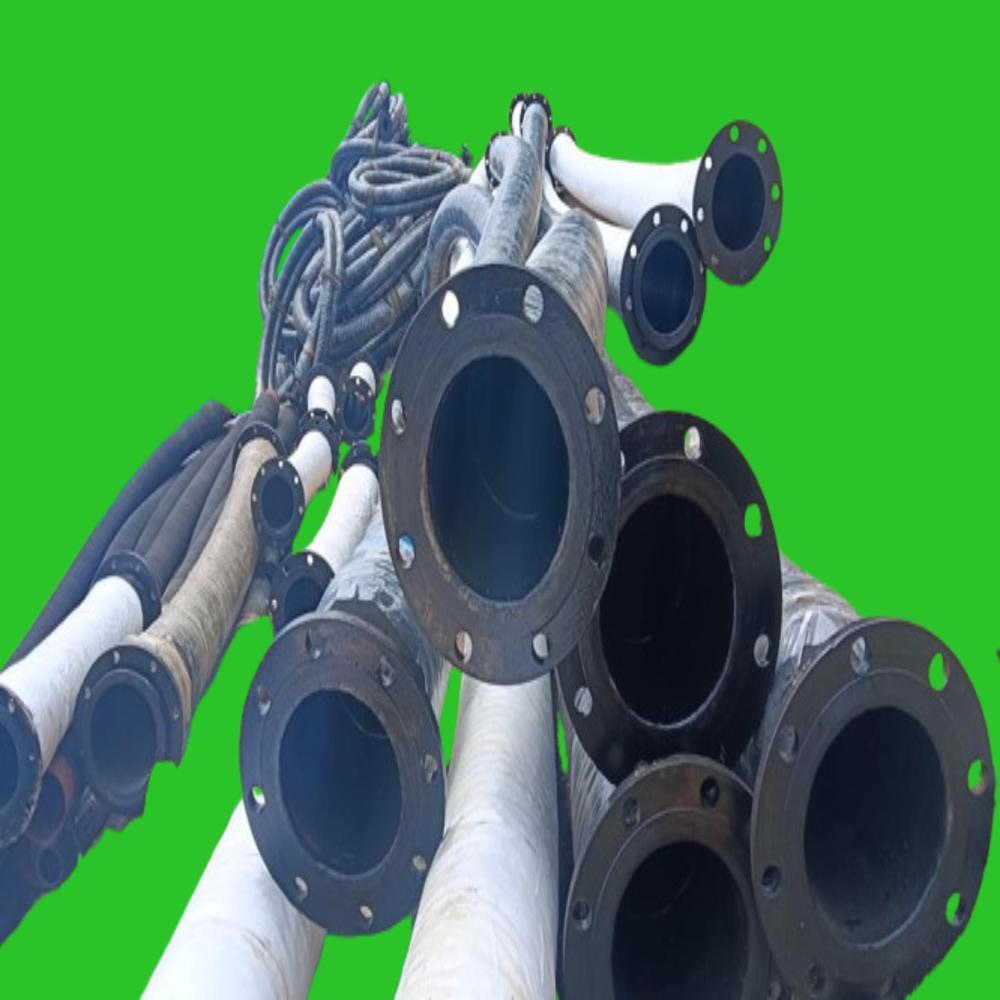
Fly Ash Rubber Hose
Price 1600.0 INR / Meter
Minimum Order Quantity : 1 Meter
Medium : Other, Fly Ash, Cement, Sand, and Slurry
Cover : Weather and Abrasion Resistant Rubber
Inside Diameter : 100 mm to 300 mm
Temperature : 20C to +80C
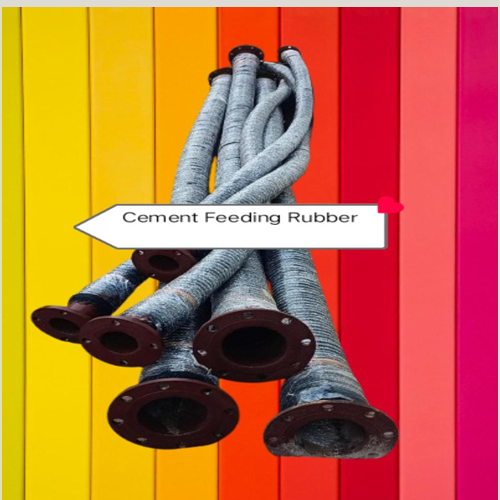
Cement Feeding Rubber Hose
Price 2100.0 INR / Meter
Minimum Order Quantity : 1 Meter
Medium : Other, Cement, Fly Ash, and Dry Bulk Material
Cover : Abrasion and weather resistant rubber
Inside Diameter : 51 mm to 152 mm
Temperature : 30C to +80C
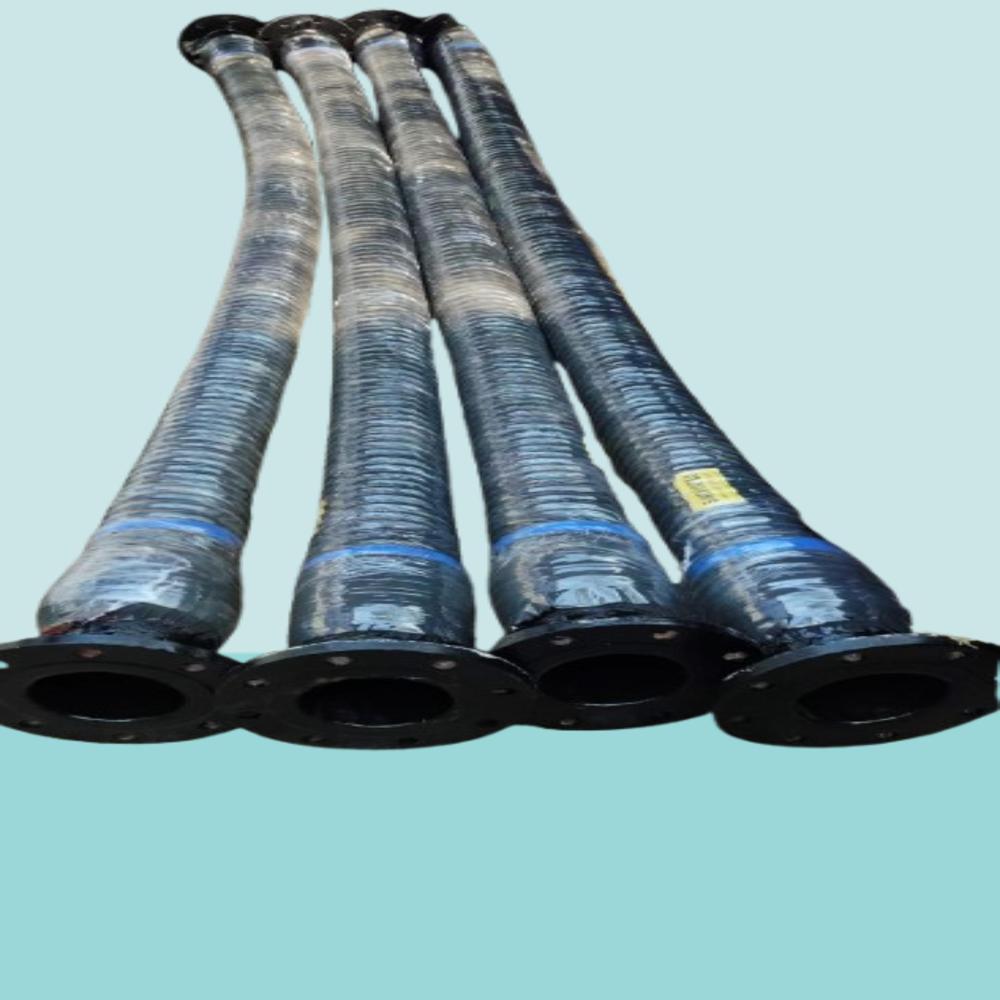
Cement Feeding Rubber Hose with Fixed Flange
Price 1600.0 INR / Meter
Minimum Order Quantity : 1 Meter
Medium : Other, Cement, Dry Bulk Materials
Cover : Abrasion and Weather Resistant Rubber
Inside Diameter : 100 mm
Temperature : 30C to +80C
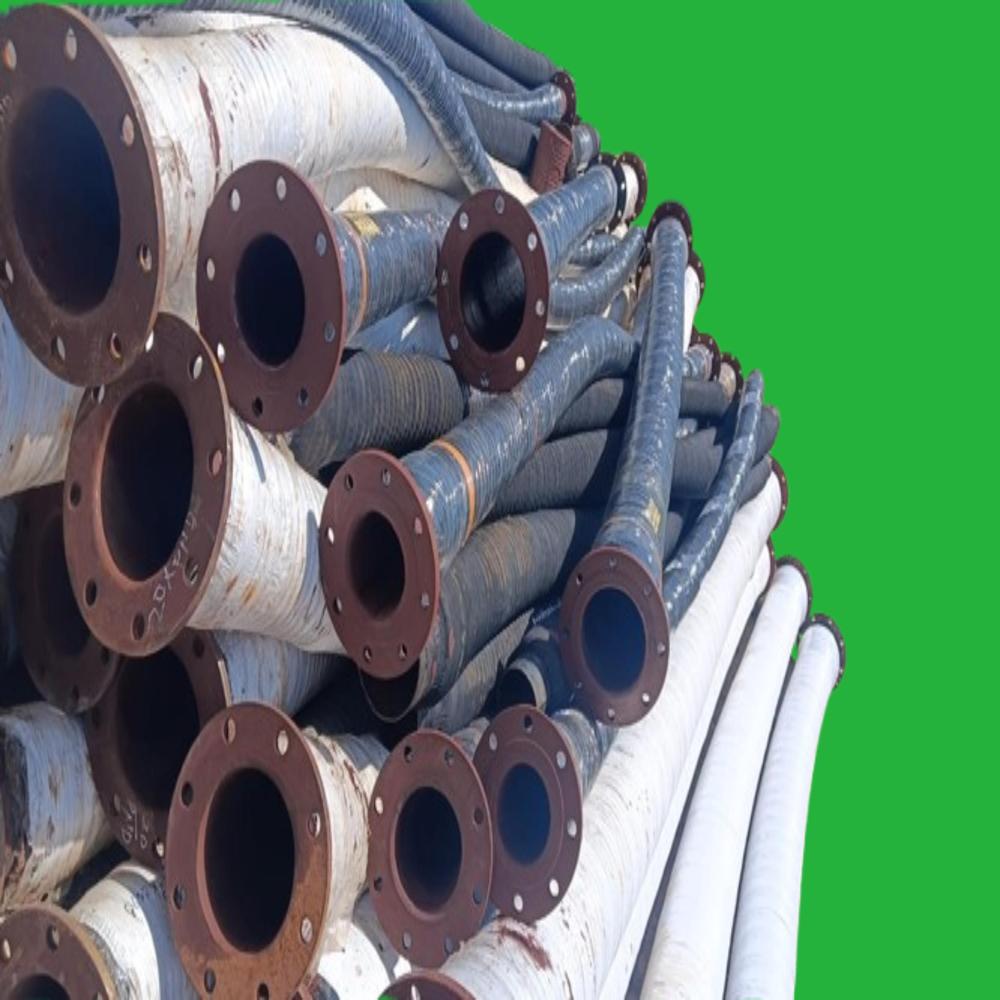
Fly Ash Rubber Hose
Price 1200.0 INR / Meter
Minimum Order Quantity : 1 Meter
Medium : Other, Fly Ash, Bulk Material, Slurry
Cover : Abrasion and weather resistant synthetic rubber
Inside Diameter : 50 mm to 300 mm
Temperature : Up to 150C


 Send Inquiry
Our Products
- PVC Water Stopper
- Rubber Gaskets
- Industrial Rubber Hoses
- Elastomeric Bridge Bearing
- Bellow And Expansion Joint
- Drainage Spout
- LDPE Sheets
- Speed Breaker
- PVC Granules
- PVC Water Bar
- Rubber Products
- Tie Rod
- Braided Pipe
- Bridge Expansion Joint
- Dam Gate Seal
- pvc water stopper
- Cement Feeding Rubber Hose
- Slurry Rubber Hose
- Water Suction and Discharge Rubber Hose
- Oil Suction and Discharge Rubber Hose
- Water Swellable Bar
- Electrical Insulating Mat
- Dewatering Rubber Hose
- Strip Seal Expansion Joint
- Pot PTFE bridge Bearing
- Expansion joint Filler Board
- PVC Foot Step
- Curing Hessian Cloth
- Vibrating Screen Rubber Beading
- Carbon Free Rubber Hose
- Rubber corner guard


24-1223/8/A, AMBEDKAR NAGAR, Gajularamaram,Hyderabad - 500055, Telangana, India

Mr Mithilesh Chaudhary
(Proprietor)
Mobile :08071781474
 Send Inquiry
 Send SMS
Developed and Managed by Infocom Network Private Limited.
